
The writer is an Indo-Pacific and Eurasian affairs analyst at the Center for Analysis of International Relations and Multiculturalism (AIR Center) based in Baku, Azerbaijan.
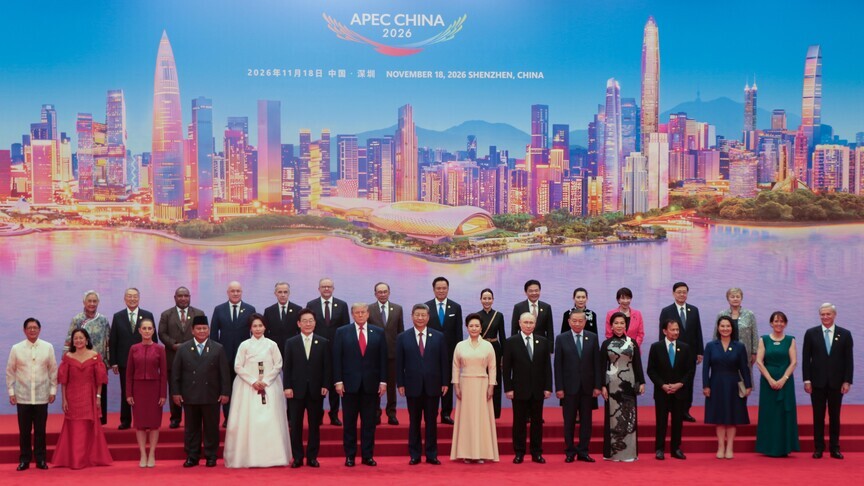
The 33rd Asia-Pacific Economic Cooperation (APEC) Economic Leaders’ Meeting, held in Shenzhen on Nov. 18-19, highlighted regional integration amid intensifying strategic competition. Under the theme “Building an Asia-Pacific Community to Prosper Together,” leaders adopted the 2026 APEC Leaders’ Declaration, setting out the Shenzhen Outlook, and three outcome documents on trade, connectivity and innovation. The agenda covered the Free Trade Area of the Asia-Pacific (FTAAP), supply-chain resilience, trade digitalization, transport links and emerging technologies. As APEC commitments are voluntary and non-binding, implementation will depend on individual member economies.
The summit's significance lies partly in Washington and Beijing's continued support for regional economic cooperation despite their disagreements. Chinese President Xi Jinping emphasized openness, innovation and cooperation, while the declaration reaffirmed market-driven integration, open trade corridors and resilient supply chains. This reflects the high degree of economic interdependence across the region. Disruptions to trade, investment and logistics could therefore generate significant economic costs for regional economies. Yet consensus on broad economic principles does not resolve disputes over tariffs, export controls, semiconductors, critical minerals, industrial policy or Taiwan. These issues continue to shape US-China relations and constrain cooperation.
The separate meeting between US President Donald Trump and Xi in Shenzhen illustrated efforts to maintain dialogue while managing differences. Public accounts indicate that they discussed trade and economic communication, Taiwan and artificial intelligence. Trump referred to the need for reasonable approaches to AI regulation, while both sides signaled an interest in keeping communication open. However, the meeting produced no comprehensive settlement of trade or technology disputes. It is best understood as part of an ongoing effort to manage competition rather than a fundamental shift in bilateral relations.
Other Asia-Pacific economies are pursuing varied approaches rather than following a single regional position. Japan, South Korea and Australia maintain close security relationships with the US alongside substantial economic ties with China. Many Southeast Asian governments seek to preserve policy flexibility, diversify partnerships and avoid excessive dependence on either power. India also emphasizes strategic autonomy while expanding selected partnerships. Often described as “hedging,” these approaches vary according to national interests, geography and exposure to economic and security risks.
The trilateral meeting between Trump, Xi and Russian President Vladimir Putin on Nov. 19 added a wider geopolitical dimension. It was the first meeting in this format among the leaders of the three countries. Their four-point declaration referred to UN reform, stable energy supplies, state officials’ immunity, and dialogue to reduce nuclear risks and prevent proliferation. The wars in Ukraine and Iran were discussed, according to reporting, but neither appeared in the published declaration, and no specific agreement on either conflict was announced. The meeting therefore demonstrated an interest in maintaining high-level dialogue on selected issues, while leaving major disagreements unresolved. Its longer-term significance will depend on whether nuclear-risk discussions develop into a sustained process.
The APEC outcomes and trilateral meeting reflect an international system in which economic interdependence coexists with strategic rivalry and diplomatic engagement. The US and China will remain central to trade rules, technology standards, investment patterns and regional security, but other economies retain agency in shaping their own relationships. Middle powers and regional groupings will continue to seek room for maneuver through diversified partnerships and issue-specific cooperation. APEC provides a forum for practical cooperation even when agreement on broader strategic questions remains limited.
The outcomes of the Shenzhen Summit also hold relevance for Türkiye, particularly given the Asia-Pacific’s growing significance in global trade, technological advancement, and strategic connectivity. Launched by the Foreign Ministry in 2019, the Asia Anew Initiative aims to deepen Türkiye’s engagement with Asian partners across a range of areas, including trade, investment, advanced technologies, transportation, logistics, and green energy. In this context, APEC’s emphasis on digital trade, customs modernization, supply-chain resilience, and infrastructure development aligns with several of Türkiye’s priorities and offers potential avenues for expanding practical cooperation with Asia-Pacific economies.
The development of the Middle Corridor provides a tangible avenue for translating this engagement into concrete initiatives. Cooperation with China, South Korea, Japan, and other Asian partners could contribute to the modernization of railway and port infrastructure, the development of logistics centers, the integration of interoperable customs systems, the expansion of digital trade, and investment in renewable energy. The successful implementation of such initiatives, however, would require commercial viability, effective institutional coordination, and close cooperation among the countries along the corridor.
At the same time, intensifying US-China competition may present additional challenges for Türkiye, including pressures related to technological choices, potential supply-chain disruptions, sanctions-related compliance requirements, and dependence on critical raw materials and industrial inputs. These considerations underscore the importance of diversifying trade partners and supply sources, strengthening domestic technological capabilities, and maintaining constructive economic and diplomatic relations with a broad range of international partners.
Overall, APEC 2026 did not resolve the major disagreements among global powers or establish a new framework for global economic governance. It highlighted the continued importance of regional cooperation amid an increasingly complex geopolitical environment. In this context, Ankara’s engagement with Asia should be aligned with its broader trade and investment objectives. Strengthening its role in Eurasian connectivity and managing external economic dependencies will also remain important priorities. At the same time, preserving diplomatic flexibility and maintaining access to diverse markets and international partnerships will be essential.
*Opinions expressed in this article are the author's own and do not necessarily reflect the editorial policy of Anadolu.
news_share_descriptionsubscription_contact

contact_the_ombudsman
is_there_an_error_in_this_story