Here's a rundown of all the news you need to start your Saturday, including Spain calling the mass migrant influx into Ceuta an "attack" while saying almost all of the 50,000 who crossed have returned to Morocco; FIFA President Gianni Infantino scrapping plans to sell a stake in a $20 billion World Cup subsidiary after backlash and a senior adviser's resignation; and the US and Israel weighing major strikes on Iran's energy infrastructure as Trump withholds final approval, with Tehran warning it has readied a "comprehensive plan" to retaliate.
Spanish Prime Minister Pedro Sanchez branded the mass influx into Ceuta "an attack" and "a violation of Spain's territorial integrity," pledging to mobilize state resources and speed up repatriations.
Foreign Minister Jose Manuel Albares said almost all of the roughly 50,000 migrants who entered the enclave since Thursday have returned to Morocco, rejecting "deliberate misinformation" and insisting the Schengen Area's integrity remains intact.
Spain's Interior Ministry put returns at over 48,300, with at least 57 deaths recorded and security forces deployed to block additional sea crossings.
Italy nonetheless suspended Schengen with Spain, temporarily closing its air and sea borders because of the scale of the influx, while the European Commission cautioned it was too early to speculate on any Schengen action against Madrid.
FIFA President Gianni Infantino said he has abandoned plans to sell a stake in a new $20 billion subsidiary overseeing the World Cup, saying the proposal had "created divisions" no longer serving its original goal. He said the plan to offer private investors up to 20% of the FIFA Forward Enterprise unit "will not proceed," and that he intends to reconvene stakeholders to keep growing football, particularly in countries most in need of support.
The reversal came after senior adviser Carlos Cordeiro resigned in protest, calling the proposal "a bad deal for football" that would mortgage the game's future, and after British Prime Minister Andy Burnham said the plan showed Infantino was "the wrong man to lead the organization."
The US and Israel are preparing for a possible bombing campaign against Iranian power plants and refineries, with strikes potentially coming this weekend, according to media reports. US President Donald Trump had yet to give final authorization.
Israel has been briefed and is coordinating with Washington, but an Israeli official said Tel Aviv was unaware of any decision to resume full-scale operations and had not been asked to join.
Speaking at Camp David, Trump said "we'll be hitting them very hard" and that Iran would eventually say it "can't take it anymore," while insisting Tehran will not be allowed a nuclear weapon. Pentagon spokesperson Sean Parnell said the US was "locked and loaded" but declined to discuss targets, and the Wall Street Journal reported officials said Trump could halt strikes and return to negotiations if there is "immediate progress" diplomatically.
Iran, meanwhile, said it has readied a "comprehensive plan" to retaliate against US and Israeli energy infrastructure if attacked, with a senior security official telling Tasnim News Agency that Tehran has "the capability and the will" to respond.
· Palestinian Islamic Jihad movement said reports of an agreement between Palestinian factions and Israel were inaccurate, while expressing reservations about the deal in its current form.
· China's Chongqing landslide death toll rose to 51, with 10 people still missing, as authorities continued underwater searches and river cleanup efforts.
· A methane gas explosion triggered a coal mine collapse in Pakistan’s Balochistan province, killing at least 34 people, while rescue efforts continued for those believed to be trapped underground.
· Moroccan security forces stopped thousands of irregular migrants from reaching Spain’s Ceuta, as Madrid and Rabat agreed to strengthen coordination and speed up the return of those who entered the enclave irregularly.
· A roadmap for the second phase of the Gaza ceasefire includes disarmament, a gradual Israeli military withdrawal, an international stabilization force and reconstruction, according to Palestinian sources.
· France said it would reinforce border controls with Spain following mass migrant arrivals in Ceuta, while Italy threatened measures including suspending Spain from the Schengen free-movement zone.
· Ukrainian President Volodymyr Zelenskyy accused Russia of prolonging the Middle East war to limit US support for Ukraine, while alleging Moscow supplied Iran with drones used in attacks across the region.
· The National Committee for the Administration of Gaza said it is ready to take over governance of the enclave, restore public services, facilitate humanitarian aid and lead reconstruction as the ceasefire roadmap advances.
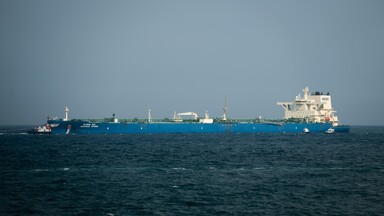
· Iran’s Revolutionary Guard said it hit and stopped two tankers in the Strait of Hormuz, while four others turned back after receiving Iranian warnings.
· Anthropic said its Claude AI models gained unauthorized access to the systems of three organizations during cybersecurity tests after a configuration error exposed isolated environments to the open internet.
· Kuwait’s army said it destroyed Iranian drones targeting vital and military facilities, while falling debris caused property damage but no casualties.
· The Democratic Republic of Congo’s Ebola outbreak has surpassed 3,530 confirmed cases, becoming the world’s second-largest outbreak by recorded infections, with 1,556 deaths reported.
· Hamas said it agreed to a written Gaza ceasefire deal for the second phase, conditional on Israel fulfilling its obligations under the first phase, including withdrawal and reconstruction.
· A passenger bus traveling from Setif overturned in Algeria’s Boumerdes province, killing at least 25 people and injuring 44, according to Civil Protection.
· The Board of Peace set a $400 million limit for financial commitments the future Gaza administration can address, with measures to be implemented over a three-year transition period.
· Pakistan’s military said security forces killed 2,084 militants in more than 40,000 counterterrorism operations this year, as militant attacks killed 819 security personnel and civilians.
· Israeli Defense Minister Israel Katz said the government approved 104 settlements and nearly 160 settlement farms in the Occupied West Bank since November 2022, according to Israeli media.
· The US military’s Central Command rejected Iran’s claim that it closed the Strait of Hormuz, saying the vital waterway remains open to commercial vessel traffic and is not controlled by Tehran.
· UN Secretary-General Antonio Guterres warned that the Gulf conflict is fueling global instability as trade through the Strait of Hormuz collapses, urging the restoration of navigational rights and freedoms.
· US President Donald Trump said Washington has not agreed to give Ukraine Patriot missile technology, saying such a transfer would likely never happen.
· The US added 43 Chinese companies to its forced labor import blacklist for alleged links to forced labor involving Uyghurs and other minority groups, marking the largest expansion of the list since 2021.
· An F-35B fighter jet crashed near the US Marine Corps Air Station Miramar in California, with the pilot ejecting and being recovered, said officials.
Annual consumer inflation in the eurozone rose to 2.9% in July from 2.8% in June, a flash estimate from Eurostat showed, driven largely by a 10% year-on-year jump in energy prices after an 8.5% rise in June.
Services inflation climbed to 3.3% from 3.2%, while non-energy industrial goods inflation rose to 0.9% from 0.7%. Food, alcohol and tobacco prices grew 1.2%, easing from 1.5% in June, and core inflation excluding energy and food ticked up to 2.5% from 2.4%.
Consumer prices in the bloc rose 0.2% in July.
Türkiye recorded its highest-ever June export value and the third-highest monthly export total in its history, said Trade Minister Omer Bolat, with exports climbing 21.7% year-on-year to $24.92 billion. Imports rose 23% to $35.29 billion, widening the foreign trade deficit by 26.2% to $10.37 billion, while the export-to-import coverage ratio slipped to 70.6% from 71.4% a year earlier.
Excluding energy and non-monetary gold, exports grew 23.2% to $23.3 billion and imports rose 24.3% to $28.02 billion, narrowing that deficit to $4.71 billion. Manufactured products made up 93.7% of exports, with Germany, the US and Italy the top destinations and China the leading import source.
For the first half of 2026, exports rose 3.5% to $135.98 billion and imports climbed 4.6% to $189.12 billion, widening the deficit 7.4% to $53.14 billion. Bolat said Türkiye wants to exceed its medium-term export target of $282 billion despite geopolitical tensions and weak external demand.
news_share_descriptionsubscription_contact