EXPLAINER - What to know about Nord Stream sabotage trial
Germany to try Ukrainian suspect over 2022 Baltic Sea explosions that damaged 2 major gas pipeline systems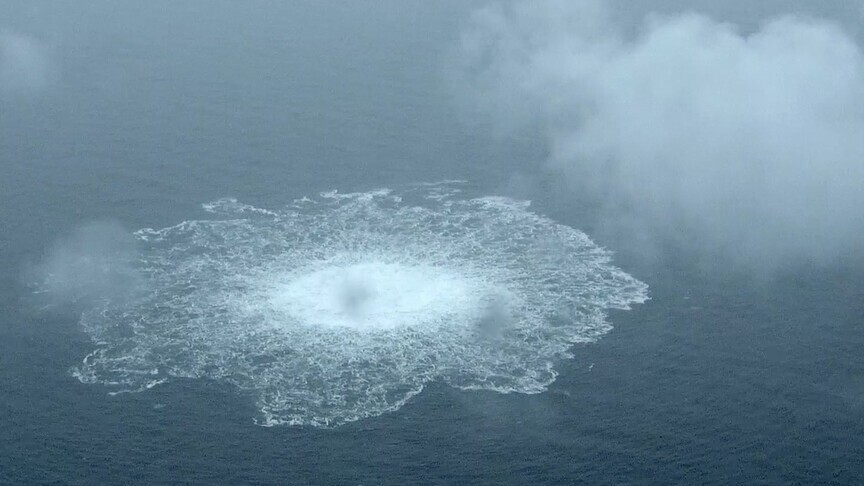
- Incident triggered competing accusations over who was responsible, with several countries rejecting allegations of involvement
Germany is preparing to put a Ukrainian national on trial over the September 2022 explosions that damaged the Nord Stream gas pipelines in the Baltic Sea, with prosecutors alleging that Ukrainian state authorities ordered the operation.
The suspect, identified as Serhii K., is accused of helping lead a group that carried out the sabotage. His indictment marks the first time German prosecutors have formally brought the Nord Stream sabotage case before a court.
Another suspect, identified by Germany as Vladimir Z., is in custody in Croatia and is fighting extradition. He was earlier detained in Poland.
What happened to Nord Stream?
Nord Stream is a network of offshore natural gas pipelines connecting Russia and Germany beneath the Baltic Sea. The four lines of Nord Stream and Nord Stream 2 had a combined annual capacity of 110 billion cubic meters.
Construction of the first Nord Stream pipeline was completed in 2011, and it began operating in 2012. Nord Stream 2 was completed in September 2021 but never entered service.
In September 2022, Nord Stream AG, the operator of the pipelines, confirmed damage to both systems as Danish and Swedish authorities reported explosions and gas leaks in sections passing through their respective waters.
Pipeline pressure stabilized, and the gas leaks stopped several weeks after the incident, with Russia opening a criminal case on charges of international terrorism.
Russian President Vladimir Putin later described the US and countries with alternative energy supply routes to Europe, including Ukraine and Poland, as “beneficiaries” of the disruption.
Which countries have been accused of involvement?
While Western officials initially suspected Russia, German investigators later focused on possible Ukrainian involvement. The US, Poland and the UK have also faced allegations, but have denied involvement.
Kremlin spokesperson Dmitry Peskov dismissed claims of Russian involvement as “quite predictable and also predictably stupid,” stressing Moscow lost a route for gas supplies to Europe.
The US rejected the allegations as “Russia's disinformation,” while Poland called the claims “completely groundless insinuations.”
In August, Polish Prime Minister Donald Tusk said Germany should not prosecute suspects accused of blowing up the Nord Stream pipeline, adding that those who built the project “should be ashamed, not those who disabled them.”
The UK also rejected allegations, saying Russia was “resorting to peddling false claims of an epic scale.”
Ukrainian President Volodymyr Zelenskyy denied Kyiv's involvement, saying the government has officially never taken part in any operation related to the Nord Stream blast.
He said Ukraine held high-level talks with Germany on the issue, and that German officials knew Kyiv was not involved in planning or carrying out the operation.
What do German prosecutors say?
Serhii K. was detained in Italy near Rimini in August 2025 on suspicion of involvement in the sabotage. He was extradited to Germany three months later and has remained in pretrial detention in Hamburg.
The suspect is charged with causing an explosion, damaging property, disrupting public services and being an “accomplice to war crimes” for targeting civilian objects, prosecutors said.
German prosecutors allege that Serhii K. was an officer in the Ukrainian army at the time, and helped plan the operation with other military personnel “acting on behalf of state bodies in Ukraine.”
Prosecutors allege the objective was to destroy both pipelines, permanently halt Russian gas deliveries and prevent Moscow from using energy revenues to finance its war against Ukraine.
Investigators claim the suspects traveled to Germany using forged Ukrainian passports and hired a yacht, the Andromeda. Traces of the explosives HMX and RDX were found aboard the vessel.
According to prosecutors, the explosives were attached to the pipelines near Denmark’s Bornholm island using timers by Sept. 22, 2022. They detonated four days later, causing extensive damage and rendering the pipelines inoperable.
Serhii K. denies the allegations.
The high-profile trial opens in a Hamburg court on Wednesday.