Anadolu Ajansı © 2026


A succession of powerful earthquakes across Latin America and Asia has made 2026 feel like an unusually restless year, prompting questions about whether the planet has entered a period of heightened seismic activity.
A magnitude 7.4 earthquake struck western Colombia on Aug. 10. Four days later, a magnitude 7.7 earthquake ruptured beneath the Flores Sea in Indonesia, triggering a tsunami and a long sequence of aftershocks.
Those events followed a magnitude 7.8 earthquake south of the Philippines on June 7, a magnitude 7.5 event near Venezuela on June 24 and a magnitude 7.3 earthquake off southern Mexico on July 17.
Yet two earthquake specialists who spoke to Anadolu said the apparent surge is not supported by the global data. What has changed, they said, is the visibility and impact of some of this year's events, not the underlying worldwide rate.
“There are, on average, about 16 magnitude 7+ events per year. There have been 11 so far this year, so it is a very typical year. The difference is that this year, the events are more newsworthy than previous years,” said Richard Styron, senior active faults specialist at the Global Earthquake Model Foundation.
The figure is consistent with the long-term record maintained by the US Geological Survey (USGS), which says the world can expect about 15 earthquakes in the magnitude-7 range and one magnitude-8 or greater event in an average year.
Dr Margarita Segou, an earthquake seismologist at the British Geological Survey, reached the same conclusion.
“Yes, we are still on the normal year-to-year variation,” she said.
Segou said the global picture must be distinguished from regional patterns, because places such as Indonesia, Venezuela and Colombia have different tectonic settings and characteristic earthquake rates.
“Indonesia has an average rate the last decade of one to two events larger than magnitude seven per year,” she said, adding that the country's magnitude 7.7 event therefore remained within its observed rate.
The impression of a surge is strengthened when several major events occur within weeks of one another. Styron said that pattern can emerge even when the earthquakes are independent.
“Truly independent events often appear clustered, but this is purely coincidental. When events are more evenly spaced out, this is evidence that there is some greater coordinating process occurring. Mathematically, purely random, independent occurrence is called a Poisson process,” he said to Anadolu.
“There are both clusters and gaps that do not intuitively seem to be random to many people, but they are in fact random.”
Segou said the same question has repeatedly surfaced following earlier runs of major earthquakes, recalling research conducted after a similar period in 2014 that found the activity remained within statistical expectations.
Segou said, “People's memory tend to be, you know, shorter,” adding: “Scientific memory is a little bit longer, but then again, you know, it is constrained by our lifetime.”
The recent earthquakes have also attracted attention because several affected populated areas or produced secondary hazards.
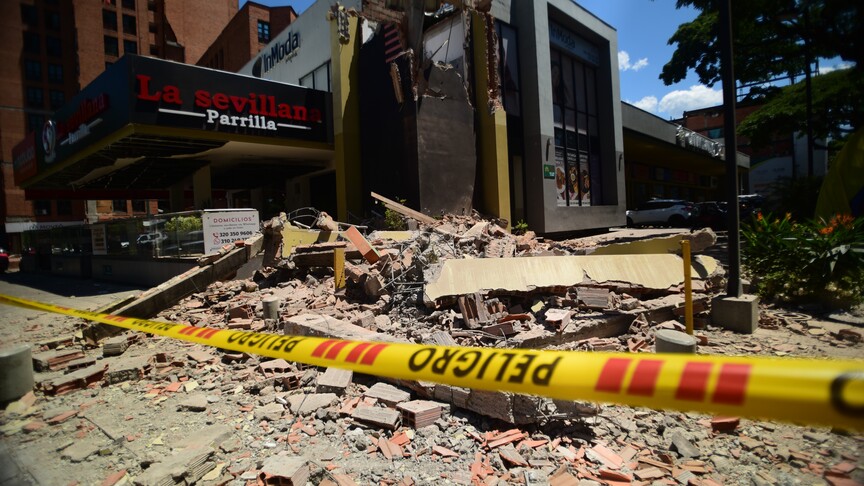
The Colombian Geological Service (SGC) measured the Aug. 10 earthquake at a depth of 103 kilometers and described it as the country's largest recorded event of the 21st century. More than 20,000 reports were received from people who felt the shaking across over 1,200 population centers.
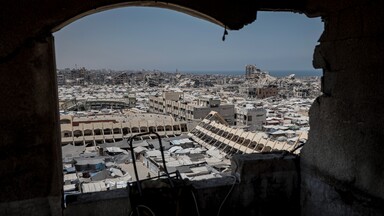
Indonesia's Meteorology, Climatology and Geophysics Agency (BMKG) placed the Flores earthquake at a much shallower depth of about 15 kilometers. The offshore reverse-faulting event generated a tsunami, while thousands of aftershocks followed the main rupture.
The contrasting depths, locations and consequences helped make the two events especially prominent, even though their occurrence did not take the global count outside the expected range.
Both specialists stressed that earthquake triggering is real, but is clearest close to the original rupture, particularly in an aftershock sequence.
Segou said scientists increasingly use the broader term “triggered seismicity” for the process traditionally described through aftershocks. Following a large rupture, she said, “the Earth's crust is trying to rebalance to get to a new state.”
That adjustment transfers stress to nearby parts of the crust and can produce further earthquakes, sometimes large enough to worsen existing destruction.
Segou said “any damages we observe anywhere in the world after a large earthquake, they might be further aggravated by the continuing occurrence of aftershocks.”
Scientists can estimate where aftershocks are more likely by calculating changes in stress around a rupture. Segou said operational earthquake forecasting can then assign probabilities to the number, location and magnitude of aftershocks expected over a defined period.
“So we can estimate that, and it is a process in your mind very similar to what you hear for weather every day, so you have some probability that a heavy rain will happen,” she said.
Styron said the geographical range in which triggering may be considered scales approximately with the size of the first earthquake.
“Beyond that, earthquakes may be considered to be triggered when they are within a distance that scales with the size of the first earthquake, roughly, 1 km for a magnitude 5, 10 km for a magnitude 6, 100 km for a magnitude 7, and occur within a very short time,” he said.
At greater distances and longer intervals, the evidence becomes progressively weaker and the scientific debate grows.
This distinction is crucial when considering whether the recent Colombian and Indonesian earthquakes were connected. Seismic waves from a very large earthquake can travel around the planet and may disturb faults far from the epicenter, but the observable effect is generally limited to very small earthquakes.
“There is very weak observational evidence suggesting that the passing of seismic waves from very large events can trigger very small events (magnitude < 2) throughout the globe. However there is no evidence or physical mechanism known to support triggering of large events over great distances,” Styron said.
Segou similarly said the Colombian earthquake was consistent with the known tectonic history of its region, while Indonesia is independently one of the world's most seismically active areas. Establishing that a distant earthquake promoted another large rupture would require a detailed event-by-event study and would be rare.
“Understanding how a large earthquake might promote another large earthquake in a region so far, such as Indonesia, is something which is studied on a base by base. It is very rare,” she said.
Another reason earthquake activity can appear to increase is the rapid improvement in monitoring. Denser seismic networks, machine learning and artificial intelligence can now identify large numbers of small events that older systems would have missed.
“So machine learning and artificial intelligence gives us ways to detect very small magnitude earthquakes that we couldn't detect before,” Segou said.
“The second thing is that those small magnitude earthquakes, although there are more, they're not necessarily felt by the population, but they have a very significant scientific value.”
These detailed catalogs allow researchers to follow how a sequence evolves, reveal interactions hidden between larger earthquakes and improve short-term forecasts. They do not, however, explain the apparent rise in major earthquakes because the global record for large events has long been reliable.
“The global record of major earthquakes is very complete for the past 50+ years. We are seeing very typical numbers of events this year. Again, the difference is in how newsworthy the individual events are,” Styron said.
Risk comes from exposure, not population causing earthquakes
While population density does not influence whether an earthquake occurs, it can transform a geological event into a human catastrophe. The outcome depends on where the rupture happens, its depth, the strength and duration of shaking, local ground conditions, exposure and the resilience of buildings and infrastructure.
news_share_descriptionsubscription_contact