- UNSW researcher says turtles could become 'cost-effective, long-term' component of global ocean observing system
- Study finds turtle-borne sensors recorded rapid ocean cooling during cyclones
Sea turtles could help scientists improve tropical cyclone forecasting by providing real-time data from the ocean, according to a researcher at the University of New South Wales Canberra.
Tropical cyclones cause major damage every year in Australia and other countries, but forecasting them remains limited by a basic problem: a lack of real-time data for scientists from the ocean.
Collecting such data during a tropical cyclone is extremely difficult, since giant waves and hurricane-force winds can make operating research vessels and other equipment dangerous or ineffective.
Yet the condition of the upper ocean is crucial to understanding how cyclones develop, as storms feed on warm surface waters, while strong winds and waves mix warm and cold waters in the ocean, bringing cooler water up from below.
That is where sea turtles could help.
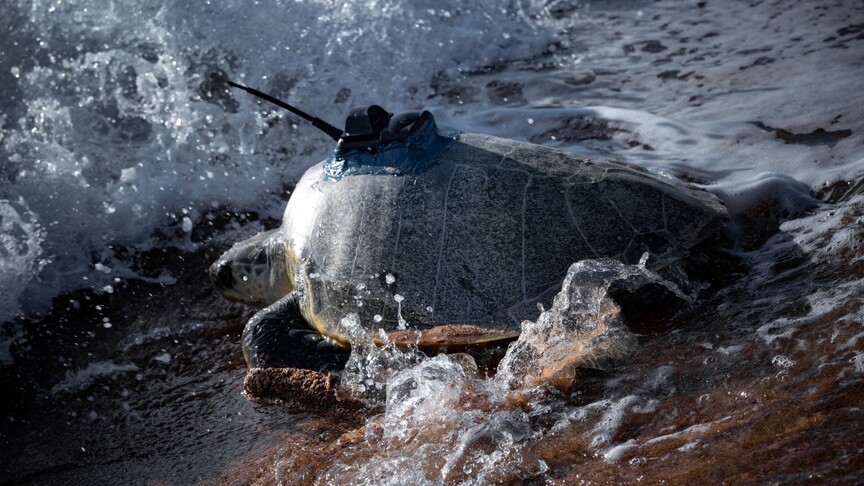
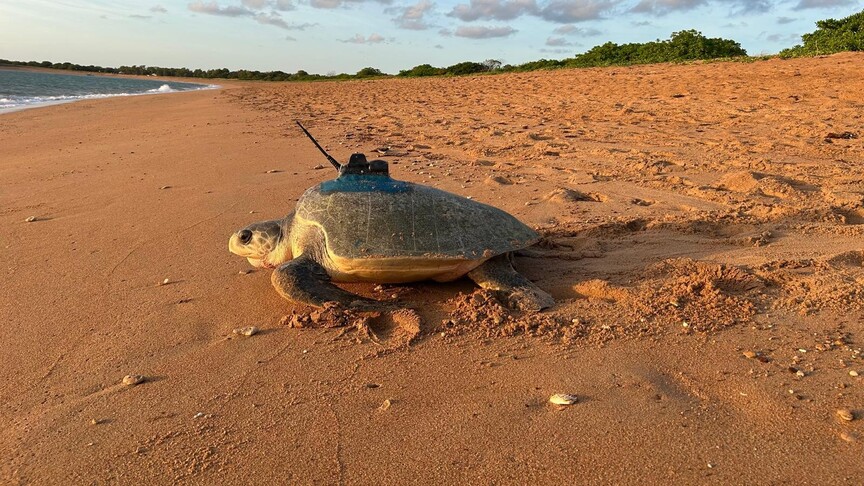
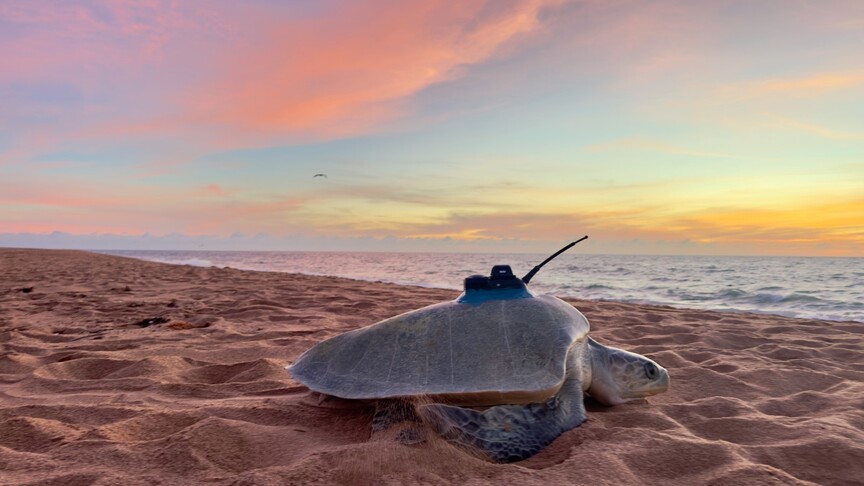
As they move through the upper layers of the ocean, turtles fitted with small sensors can collect information about water temperature and diving depth, with GPS data then allowing scientists to determine exactly where those measurements were taken.
The approach was examined by Christopher Chapman, an oceanographer at the University of New South Wales Canberra, in research published in the journal Environmental Research Letters.
Turtles could help fill cyclone data gaps
Speaking to Anadolu, Chapman said sea turtles could one day become an additional source of data for the global system used to monitor tropical cyclones.
In this context, Chapman stated that one of the turtle species used in the study, the Olive ridley, or Lepidochelys olivacea, lives throughout the tropics, with large numbers located in cyclone-prone regions such as southeastern Africa and the Bay of Bengal.
“These oceans are not well observed, and turtles could partially fill this data gap. However, they would never be more than one part of a global tropical cyclone observing system," he said.
Chapman noted the technology used in the study was itself adapted from other marine animals, and that the instruments were originally deployed on elephant seals in polar regions.
As for extending this technology to other marine animals, such as sharks, seals or whales, Chapman said this would be "more difficult."
"Both turtles and seals come onto land, where we can deploy the instruments safely. Deploying on animals in the water is more difficult and costly,” Chapman said.
Cyclone encounters surprised researchers
Regarding what surprised the research team the most when analyzing the data collected by turtles, Chapman particularly pointed to how often tagged turtles ended up near tropical cyclones.
“Many things surprised us, but mostly the number of turtle-cyclone encounters that we had!” Chapman said, expressing that they are looking forward to analyzing how the turtles respond to cyclones.
"Do they change their behavior to avoid the storm? Do they like to forage for food in the cyclone’s wake?" he further said, noting that while they do not know the answer to these questions, the dataset collected could provide some answers."
He also noted that the potential applications of this approach are not limited to monitoring tropical cyclones.
According to Chapman, sea turtles equipped with sensors can collect information in areas where other oceanographic observations are virtually nonexistent.
"Turtles equipped with sensors could become a cost-effective and long-term component of a global ocean monitoring system," he argued.
He went on to say that if they maintain the "turtle network," they hope to use the data they obtain to improve oceanographic and meteorological forecasts, monitor climate change, and study the behavioral responses of the turtles themselves in the face of climate change.
What did the study find?
In the study, scientists used data from miniature oceanographic sensors mounted on sea turtles off the northern coast of Australia.
Flatback turtles, or Natator depressus, and Olive ridleys collected water temperature profiles at depths of up to 80 meters.
During the passage of five tropical cyclones, sensor-mounted turtles collected data within a 120-kilometer radius of the storm centers, with observations showing that sea surface temperatures dropped by as much as 3.2 degrees Celsius as storms passed.
Researchers compared field data with results from a modern ocean reanalysis model and found that in two out of five cases, the model underestimated the degree of ocean surface cooling after the storm.
When researchers used the real temperature data collected by turtles, the estimated strength of all five systems was lower. For two cyclones, namely 16U and Rusty, the difference exceeded 30%.
Without accounting for the cooling recorded by turtles, the two aforementioned cyclones would have been Category 4 and 5 cyclones. Meanwhile, with the turtle data included, their estimated intensity were downgraded to tropical-storm level and Category 2 cyclones, respectively.
However, the research noted that this is not a measurement of the storms' actual strength, but rather an estimate of their potential intensity.
The findings of the study suggest that turtles could be particularly useful in areas where direct measurements are scarce.
Although they will not replace existing observation systems, they could complement them and help improve tropical cyclone forecasting.