Seyit Kurt
11 November 2026•Update: 11 November 2026
- Adaptation funding remains insufficient as demand from vulnerable nations far exceeds available resources, King tells Anadolu
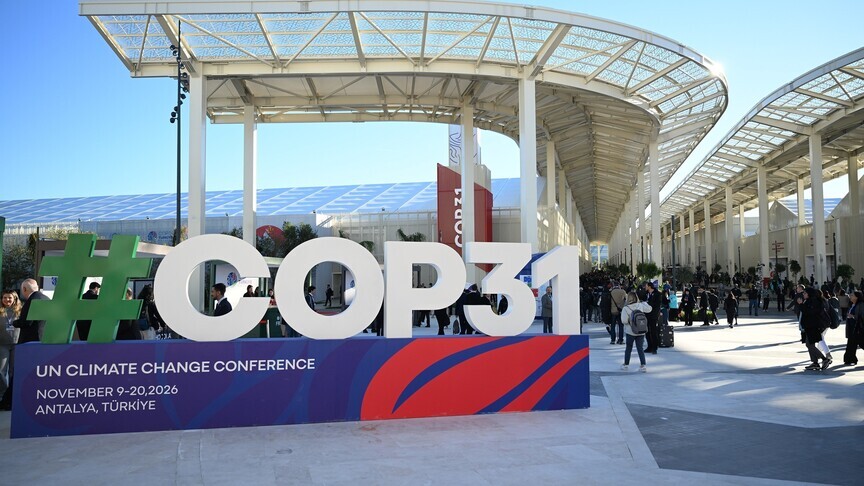
Developing countries need concrete funding mechanisms to deliver a $300 billion annual climate finance commitment rather than further pledges, a senior Cook Islands climate official told Anadolu on Tuesday on the sidelines of the COP31 UN climate summit in Türkiye.
Wayne King, director of climate change for the Cook Islands, said implementing existing financial commitments and increasing adaptation funding were among the most pressing priorities for vulnerable developing nations.
"The main thing is really to find an agreement that we can really start to move forward under what they call the new collective quantified goal," King said.
He recalled that developed countries had previously committed to mobilizing $100 billion annually to support developing nations in implementing the Paris Agreement, a target he said had only recently been achieved.
Under a subsequent agreement, countries committed to mobilizing at least $300 billion annually for developing nations by 2035.
"What we want to do is actually implement that," King said, stressing the need for a clear roadmap and mechanisms that would enable climate funds to deliver financing.
He also highlighted the importance of ensuring that the Adaptation Fund can deliver a threefold increase in financing.
"There's two key financial things in my mind and why we're here," he said.
King said the optimism surrounding the adoption of the Paris Agreement in 2015 had not fully translated into sustainable development that adequately addresses climate change and biodiversity.
"A lot of parties say it hasn't," he said, warning that shrinking financial resources were creating serious difficulties, particularly for developing countries.
Small island nations struggle to access climate funds
King also drew attention to the administrative and technical obstacles developing countries face when seeking international climate financing.
"In our case, in the Cook Islands, we spent two years learning all the procedures," he said, explaining that preparing successful project applications requires considerable expertise and institutional capacity.
He said many countries rely on international consultants or organizations to navigate the application process, while the Cook Islands chose to develop its own capabilities.
"We wanted to build our own capability, and that took time. And that's the big challenge," he said.
King stressed that available climate financing remains far below demand, citing an example of a funding mechanism that received around 120 applications despite having only approximately $150 million available.
He said individual applications sought around $20 million, bringing total demand to roughly $2 billion.
"The need outstrips the finance," he said.