Seyit Kurt
03 October 2026•Update: 03 October 2026
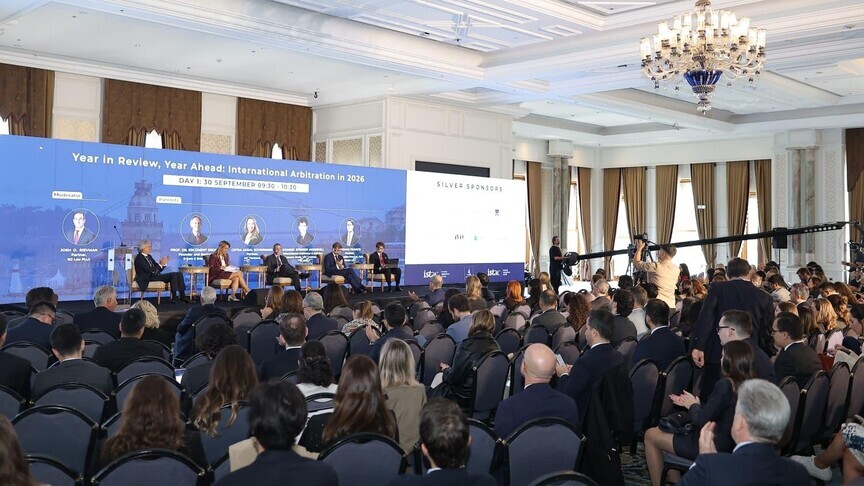
Geopolitical shocks, volatile energy prices and regulatory changes are increasingly testing contractual arrangements across the energy sector, arbitration experts said Friday on the third day of Istanbul Arbitration Days.
Istanbul Arbitration Days
Speaking at a panel on Friday titled Across the Energy Sector: Disputes, Contracts and the Issues that Matter, experts discussed challenges ranging from long-term supply agreements and sanctions to investment protection, decommissioning and damages.
Contract drafting increasingly critical amid market shocks
Timothy Smyth, partner at Boies Schiller Flexner LLP, pointed to the dispute surrounding Chevron's acquisition of Hess as an example of how the wording of contractual provisions can become decisive in major energy transactions.
The dispute involved ExxonMobil's claim that the transaction triggered pre-emption rights under a joint operating agreement covering Hess's interest in Guyana's Stabroek Block.
Smyth said the case demonstrated the importance of drafting change-of-control provisions precisely enough to account for different forms of corporate transactions.
"The important thing to note here, I think, for practitioners and for participants in the energy sector is a lesson on contract drafting," he said.
He also highlighted the growing importance of price-review mechanisms in long-term gas agreements, noting that major geopolitical shocks in recent years have dramatically affected energy markets.
Smyth added that if he was drafting a contract today, he would include provisions allowing for price review and reopening to address major market changes.
Murat Erbilen, senior partner at Lexist, said recent LNG disputes illustrated how contractual assumptions can become critical when market conditions change dramatically.
Tribunals, he said, generally focus on how the parties allocated risks and what mechanisms they included in their agreements rather than simply revising contracts because the economics of a transaction have changed.
Erbilen also highlighted decommissioning as an increasingly important source of long-term risk, particularly for oil and gas assets, where obligations may arise decades after contracts are signed.
"The lesson is simple: decommissioning should be treated as a core part of the project's risk allocation from day one," he said.
Investment protection in focus for energy projects
Paul Hinks, CEO and co-founder of Symbion, focused on risks facing energy investors in Africa, including disputes involving utilities and governments.
Drawing on his company's experience, Hinks said businesses should not only consider contractual arbitration provisions but also the investment treaty protections available when structuring investments.
He said bilateral investment treaties and access to investor-state arbitration could provide additional leverage where enforcing contractual rights alone proves difficult.
Basar Sahin, general manager of ICM Consulting Ltd., said companies frequently begin preparing for arbitration only after a dispute has already escalated.
That approach can create major evidentiary problems, particularly when companies have failed to maintain contemporaneous project records, issue contractual notices or preserve technical and financial data, he said.
"When contracts lack strict notification enforcement, precise technical specifications and mandatory data transparency, informal workarounds replace real-time documentation," Sahin said.
The panel also addressed the calculation of damages in energy disputes, including lost profits and the impact of fluctuating commodity prices.
Smyth said tribunals tend to focus on the commercial realities of a project, including its operating history, prospects and comparable projects, while the date used to value damages can significantly affect awards when commodity prices have moved sharply.
Erbilen said changes surrounding the Energy Charter Treaty (ECT) were also leading investors to consider a broader mix of protections, including bilateral investment treaties, contractual arbitration provisions and political risk insurance.
"The end of the ECT era in parts of Europe does not mean the end of investment protection for energy projects," he said.