Iran chase World Cup breakthrough after chaotic buildup
Iran start their World Cup campaign against New Zealand as visa delays, a base-camp switch and war-disrupted preparations test hopes of reaching the knockout stage for the first time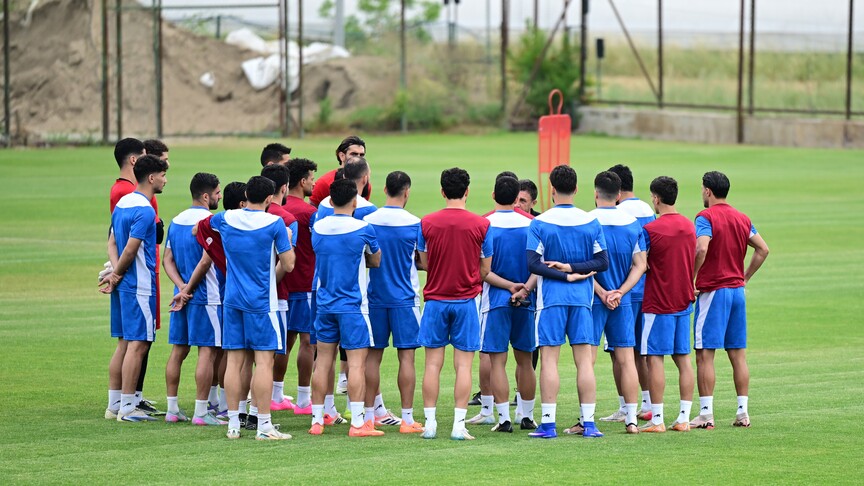
- Analysts say Iran remain favorites against New Zealand, but political tensions, logistical hurdles and limited preparations have added uncertainty to a campaign carrying heavy expectations at hom
Iran will kick off its 2026 FIFA World Cup campaign against New Zealand early on Tuesday amid heavy expectations and growing uncertainty off the pitch.
Ranked 20th in the world, Team Melli will be aiming for a strong start against 85th-ranked New Zealand, having managed just three victories across six previous World Cup appearances between 1978 and 2022.
The team has never advanced to the knockout stages of the World Cup, with its happiest moment remaining the 2-1 victory over the US in 1998, its first-ever World Cup win.
On paper, the odds favor the Iranian side, but developments away from the field over recent months have threatened to affect preparations and performance heading into the opener.
With just hours remaining before kickoff, several members of Iran’s support staff, including team supervisor Mahdi Mohammad Nabi, did not receive US visas, casting uncertainty over the team’s preparations ahead of the biggest football competition.
‘FIFA failed to deliver on promises’
In remarks published on the Iranian Football Federation’s website on Friday, team supervisor Mahdi Mohammad Nabi said FIFA President Gianni Infantino has “failed to deliver on promises” to secure visas for all members of the Iranian contingent ahead of Team Melli’s three group-stage fixtures – two in Los Angeles against New Zealand and Belgium, and one in Seattle against Egypt.
"We hope Infantino will indeed implement the words and promises he made to the Iran national team," Nabi said. "The FIFA regulations and protocols must be properly followed by both member federations and hosts."
His comments came a day after Infantino told a press conference in Mexico City that Iran’s participation in the 2026 FIFA World Cup, co-hosted by the US, Mexico and Canada, reflects football’s ability to overcome political tensions, referring to the hostilities between Tehran and Washington that started on Feb. 28.
“If I had to go with a bus to Tehran and drive them (the Iranian team) here, I would do that," Infantino told reporters, referring to his efforts to ensure Iran’s participation in the tournament, especially after growing calls inside Iran to boycott the event.
A source inside the Iranian Football Federation told Anadolu on Friday that efforts were still underway to secure last-minute US visas for members of support staff ahead of the three matches.
“We haven’t given up yet, and FIFA is also trying to help us secure visas for remaining members of the contingent, at least for some key members, if not all of them,” he said.
Late on Saturday, four members of the contingent, including the head of the federation's international relations wing, an international relations officer, a security officer, and a team analyst, were given the visas, while other senior officials were snubbed, including the team manager.
Boycott or no boycott
Two weeks ago, speaking at the FIFA Congress in Vancouver, Infantino confirmed that Iran will take part in the 2026 World Cup, dismissing speculation over a possible boycott.
During the war, particularly after the 12,000-seat indoor arena at Tehran’s Azadi Sports Complex was destroyed in a US-Israeli airstrike on March 5, calls to boycott football’s biggest tournament had grown increasingly loud.
Days after the attack, Iran’s Sports Minister Ahmad Donyamali categorically rejected the country’s participation in the world’s premier football event, calling the US a “corrupt regime,” and asserting that “under no circumstances can we participate in the World Cup.”
However, following the ceasefire in early April and subsequent negotiations, mediated by Pakistan, aimed at a permanent end to the war, FIFA intensified its efforts to persuade Iran to participate, a source within the Iranian Football Federation told Anadolu.
Base camp switch from US to Mexico
Initially, Iran’s team was scheduled to set up its base camp at the Kino Sports Complex in Tucson, Arizona. However, on May 23, Iranian Football Federation President Mehdi Taj announced that the base camp had been relocated to Tijuana, Mexico.
The relocation was requested by the Iranian federation amid escalating tensions between the two countries and delays in the issuance of visas for players and support staff.
On June 3, visas for the Iranian delegation, including coaching staff and support personnel, were issued by the Mexican authorities. Two days later, US visas were also granted, although several members of the support staff were notably absent from the list.
Among those denied entry were Nabi, along with other officials in executive, managerial, and media roles, raising concerns over potential disruptions to the team’s preparations.
“This long visa issuance process caused our hosting to be moved from another city to Tijuana, and practically disrupted the process of our players adapting to the tournament conditions,” Nabi said in remarks on Friday.
FIFA’s politics, logistical issues and impact
Last week, Iran’s Ambassador to Mexico Abolfazl Pasandideh said the team had been instructed to enter and exit the US on the same day for each of its three group-stage games, raising logistical concerns as players will not have time to acclimate to conditions.
Article 35.2 of the Regulations for the FIFA World Cup 2026 states that teams scheduled to play in a stadium where they have not previously played “will be entitled to a familiarisation session in that stadium either the day before the match or two days beforehand.”
It took multiple follow-ups through FIFA to allow the team to board a chartered plane to Los Angeles a day in advance. They landed in the city where they would play the first two matches late on Sunday, federation officials confirmed to Anadolu.
Nima Tavallaey Roodsari, an Iranian-Swedish football journalist and co-host of the Italian Football Podcast, said the visa and logistical issues are unlikely to affect performances on the pitch, but could significantly disrupt preparations for the three matches, particularly given that at least one match analyst, as well as members of the media team, have not been issued visas.
However, Roodsari added that the situation could also serve as a source of motivation for players ahead of the important campaign.
“The players will be fired up as this behavior towards them inevitably creates a siege mentality of us vs the world. It remains to be seen if Ghalenoei (coach) and the rest of the technical staff can channel that energy into a great, disciplined performance on the pitch.”
War conditions and lack of preparations
These logistical challenges were further compounded by the recent war, which disrupted the team’s preparations by preventing it from holding structured training camps or friendlies. Instead, the team had to settle for short in-house camps, according to Farshad Ashoubi, a former Iranian international who now coaches a prominent domestic club.
“We were unable to go through the planned preparation process due to special conditions in the country. Things became difficult, and we were forced to resort to domestic training camps and intra-team matches. We also had no good friendlies,” Ashoubi told Anadolu.
He added that, alongside visa complications and accommodation hassles, these factors have contributed to a broader set of challenges, while lamenting that global sporting events such as the FIFA World Cup are increasingly “influenced by political demands and objectives.”
Ali Kafashian, former president of the Iranian Football Federation who favored Iran’s participation in the 2026 World Cup despite war, said the tense environment created by the recent war and ongoing hostilities has “paradoxically strengthened the team’s resolve.”
“In my opinion, the atmosphere in the country and the national team has had the opposite effect on players. It motivates them to show what they are capable of. They want to say: ‘Despite all the pressure, we have no problem. We come from a country where some are fighting on the front lines and others are standing in the streets’,” Kafashian told Anadolu.
Referring to the widespread public backing for the team despite the recent happenings, he noted that the players now feel a strong sense of responsibility to the nation and are expected to enter the tournament with “unwavering determination.”
“They must take to the field with determination and make Iran proud,” Kafashian said.
Team chances in 2026 World Cup
Ashoubi said that despite the prevailing conditions and the pressure surrounding the team, the team has no choice but to manage the situation effectively, overcome the difficulties, and deliver strong performances at the 2026 World Cup.
“In the end, we are professionals who must manage any atmosphere, get past these pressures, and show the highest level of quality there at the World Cup,” he told Anadolu.
The former Team Melli player added that a strong start to the tournament against New Zealand could prove decisive, describing the Kiwis as a more manageable opponent compared to star-studded Belgium and Egypt.
“Naturally, New Zealand is an easier opponent than Egypt and Belgium. A win in that match can help a lot going forward,” he said, referring to Iran’s hopes of reaching the knockout stage for the first time in its history.
Roodsari echoed that view, calling the opening fixture against New Zealand the “key game.”
“Given that eight out of twelve third-placed teams qualify for the knockout stages, the key will be to secure three points against New Zealand,” he told Anadolu.
“On paper, they should be able to, but New Zealand have caused upsets in the past as they are a tough side that defends very deep and as a unit.”