Anadolu Ajansı © 2026


The writer is a senior researcher and analyst specializing in North African geopolitics and security
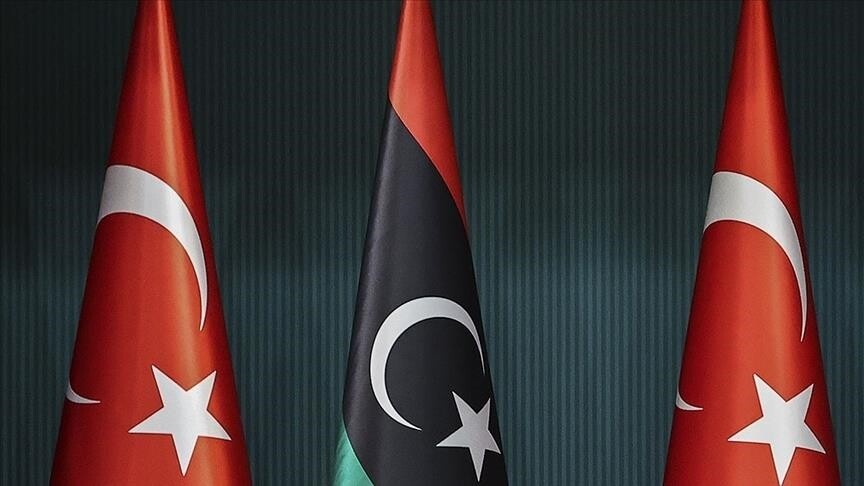
Fifteen years after the 2011 uprising, Libya remains politically divided between the UN-recognized Government of National Unity (GNU) in Tripoli and the eastern-based administration supported by Khalifa Haftar and his Libyan National Army (LNA). As international efforts to resolve this protracted stalemate continue, Turkish Foreign Minister Hakan Fidan's recent meeting [1] with Saddam Haftar, deputy commander of the LNA, illustrates Türkiye's evolving engagement with Libya's rival centers of authority.
Ankara, having long supported [2] the internationally recognized government in Tripoli, has gradually expanded its political, security, and technical engagement with eastern Libya's political and military leadership. This approach reflects a comprehensive strategy to engage all major Libyan stakeholders in pursuit of political reconciliation and institutional reunification.
Following Khalifa Haftar's offensive against Tripoli on April 4, 2019, Türkiye became the principal external supporter of the internationally recognized Government of National Accord (GNA). Turkish support extended [3] beyond the defense of the capital to include defense cooperation, military training, and capacity-building initiatives designed to strengthen Libya's security institutions and facilitate the eventual unification of the country's armed forces. By halting Haftar's advance and altering the military balance, Türkiye's intervention contributed to ending large-scale conflict and enabled the ceasefire that has largely persisted since 2020.
Since the 2020 ceasefire, Türkiye's engagement with eastern Libya has expanded from initial humanitarian assistance and reconstruction efforts to encompass closer political, economic, and defense cooperation. Saddam Haftar has played a central role in this rapprochement through multiple visits [4] to Türkiye and meetings with senior Turkish officials.
Ankara's outreach to eastern Libya has not diminished its longstanding partnership with Tripoli. Turkish President Recep Tayyp Erdogan has reaffirmed [5] his commitment to cooperation with Libyan Prime Minister Abdul Hamid Dbeibah, while Turkish officials have simultaneously deepened engagement with eastern leaders, including Intelligence chief Ibrahim Kalin's recent visit [6] to Benghazi and Foreign Minister Hakan Fidan's meeting [7] with Saddam Haftar. By maintaining dialogue with both sides, Türkiye is positioned as one of the few external actors capable of supporting Libya's political reconciliation and institutional reunification.
Türkiye's growing engagement with eastern Libya should not be viewed as a challenge to Egypt's longstanding influence or as a departure from its Libya policy. Long before the 2011 uprising, Turkish companies were active across both eastern and western Libya, reflecting Ankara's longstanding view of Libya as a single, undivided state. Today, Türkiye's outreach [8] to the east complements rather than competes with its ties to Tripoli. This approach is part of a consistent effort to keep channels open with all actor capable of shaping the country's political future. It also coincides with an unprecedented period of regional coordination between former rivals, creating new opportunities for Ankara and Cairo to use their respective influence to encourage reconciliation.
A stable Libya would primarily benefit the Libyan people, while also serving the long-term strategic and economic interests of regional actors that once backed competing factions.
Libya's strategic significance extends beyond its political context. Oil remains [9] central to Libya's economy, as the country possesses Africa's largest proven oil reserves and derives the majority of its export earnings and government revenues from hydrocarbons. However, prolonged conflict and political fragmentation have severely damaged infrastructure and reduced foreign investment, disrupting production and hindering Libya's ability to fully exploit its energy resources. As Libya works to revitalize its energy sector, Türkiye has increasingly supplemented its security engagement with expanded economic and energy cooperation.
A key development in recent years was the 2019 maritime [10] delimitation agreement signed with GNA, which redefined the geopolitics of the Eastern Mediterranean by establishing maritime boundaries between Türkiye and Libya. This agreement advanced Türkiye's strategic interests and simultaneously strengthened Libya's maritime claims and sovereign rights over its Exclusive Economic Zone (EEZ), laying the groundwork for future offshore energy exploration and enhanced bilateral cooperation.
Although Libya's eastern-based House of Representatives initially rejected the agreement, its recent decision to review and potentially ratify the accord indicates a broader improvement in relations between Ankara and eastern Libya. If ratified, the agreement would strengthen bilateral energy cooperation and serve as a clear indicator of increasing convergence between Libya's rival power centers on a matter of strategic national significance.
The US' renewed efforts to broker a power-sharing agreement between Libya's rival eastern and western administrations represent a positive development. Massad Boulos, adviser to US President Donald Trump on the Middle East and Africa, recently stated that Washington is working to help reunify Libya's fragmented institutions under a single national authority. However, previous mediation efforts, particularly those led by the UN, indicate that achieving a political settlement remains highly challenging.
Although the GNU is internationally recognized and supported by the UN, its authority does not extend throughout the entire country, leaving eastern Libya under separate administration. Consequently, efforts to conduct national elections have remained stalled since the postponement of the December 2021 vote. Ongoing disagreements over the constitutional framework, electoral laws, candidate eligibility, and the fragile security environment continue to impede progress toward reunifying Libya's institutions.
Libya's future will ultimately be determined by its own citizens. Nevertheless, Ankara's recent efforts to engage both eastern and western Libya constitute a constructive step toward dialogue during a period of deep division. Although these initiatives alone may not resolve the political deadlock, they could help establish the conditions necessary for institutional reunification, security sector reform, and, ultimately, a more stable, sovereign, and unified Libya.
[1] https://www.mfa.gov.tr/sayin-bakanimizin-libya-ulusal-ordusu-genel-komutan-yardimcisi-orgeneral-saddam-hafter-ile-gorusmesi--24-temmuz-2026--ankara.en.mfa
[2] https://dergipark.org.tr/en/pub/ortetut/article/1775978
[3] https://www.cespi.it/sites/default/files/osservatori/allegati/brief_73_turkiye_s_strategic_engagement_in_libya_-_ferhat_polat.pdf
[4] https://www.reutersconnect.com/item/turkish-fm-fidan-meets-libyan-military-commander-saddam-haftar-in-ankara/dGFnOnJldXRlcnMuY29tLDIwMjY6bmV3c21sX09XQU5BQ0FBVklERU8yMDI2MDcyNDQyMDU5NDEx
[5] https://www.iletisim.gov.tr/english/haberler/detay/president-erdogan-meets-with-pm-dbeibeh-of-libya-18-04-26
[6] https://www.aa.com.tr/tr/gundem/mit-baskani-kalin-libya-ulusal-ordusu-genel-komutan-yardimcisi-hafter-ile-libyada-gorustu/3975203
[7] https://www.aa.com.tr/tr/gundem/bakan-fidan-libya-ulusal-ordusu-genel-komutan-yardimcisi-hafter-ile-ankarada-gorustu/4008602
[8] https://www.aa.com.tr/tr/analiz/turkiyenin-libya-politikasi-mit-baskani-kalinin-hafter-ile-gorusmesi-ne-anlama-geliyor/3674987
[9] https://researchcentre.trtworld.com/publications/policy-outlook/of-energy-and-unity-oil-and-challenges-to-libyas-political-and-economic-future/
[10] https://www.aa.com.tr/en/energy/general/turkey-parliament-ratifies-maritime-pact-with-libya/27624
[11] https://www.ft.com/content/f5c43a41-3fa1-486e-a592-7933bc1bdcbd?_gl=1*vrzuso*_up*MQ..*_gs*MQ..&gbraid=0AAAAAC_ArBtrOvqdMRYa8qynzJoBvNtso&gclid=Cj0KCQjwg5zTBhCLARIsAP2AFU6G5zFQtek6upd0bopVkLbsRKMxs7qdn9JNxxEtDq2eFyD_6c7C_mAaAsPkEALw_wcB&gclsrc=aw.ds&syn-25a6b1a6=1
*Opinions expressed in this article are the author's own and do not necess
news_share_descriptionsubscription_contact