Sahin Demir
02 November 2026•Update: 02 November 2026
Iran said Monday that it continues exchanging messages with the US through mediators, while stressing that its revised seven-stage diplomatic proposal could be fully implemented within two days.
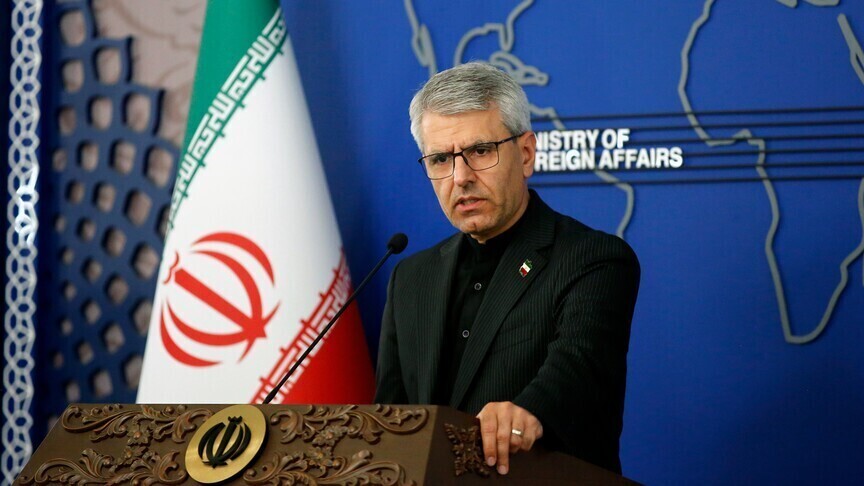
Speaking at a weekly press conference, Foreign Ministry spokesman Esmaeil Baqaei said diplomatic contacts between Tehran and Washington were ongoing, with Iran’s existing proposal remaining the basis for indirect negotiations.
He said the initiative was discussed extensively during an Iranian delegation’s visit to New York, with Tehran subsequently receiving Washington’s views through mediators.
Baqaei said the original seven-stage proposal had been condensed into a plan that could be implemented within two days, describing the shortened timeline as a “demonstration of Iran’s goodwill and constructive approach” toward diplomacy.
He added that the plan could pave the way for the resumption of negotiations and the rapid restoration of security in the Strait of Hormuz, provided Washington met Tehran’s demands.
“The ball is now in the US court,” he said, stressing that no agreement could be reached and the Strait of Hormuz could not be reopened or secured unless Washington ended its naval blockade and met Tehran’s demands.
Baqaei also confirmed that Deputy Foreign Minister Kazem Gharibabadi visited Doha to facilitate the exchange of messages between Tehran and Washington through Qatari mediation.
Regarding a recent US letter, he said the secretary of Iran’s Supreme National Security Council would decide how to respond, based on the country’s national interests.
He stressed that the letter had not initiated a new diplomatic process, as Tehran’s existing proposal remained the framework for indirect talks.
The spokesman said Parliament Speaker Mohammad Bagher Qalibaf was leading the latest negotiations, while the Supreme National Security Council remained responsible for overseeing the broader diplomatic process.
Baqaei also expressed caution about renewed diplomatic efforts, citing the breakdown of the previous Islamabad negotiation process and recent remarks by US President Donald Trump dismissing those talks as a waste of time.
The spokesman said Tehran was demanding the removal of all US sanctions imposed after what he described as Washington’s violation of the Islamabad understanding, along with the release of Iranian assets previously agreed upon under that arrangement.
- No nuclear inspections
On nuclear inspections, Baqaei said Iran had not yet reached the stage of discussing the resumption of International Atomic Energy Agency (IAEA) inspections, accusing the watchdog’s director general of failing to condemn US and Israeli attacks on Iranian nuclear facilities.
He reaffirmed that Iran remained committed to its obligations under the Nuclear Non-Proliferation Treaty (NPT), despite growing domestic debate over its nuclear doctrine, and accused Washington of undermining the global nonproliferation regime through military threats.
Regarding the possibility of renewed military confrontations, Baqaei said Iran considered the ongoing US economic blockade and military threats part of a continuing war, stressing that Tehran remained prepared for all possible scenarios even as diplomatic contacts continued.
On Tuesday’s US midterm elections, he said Tehran did not expect a fundamental change in Washington’s approach regardless of the results, adding that Iran’s diplomatic decisions and the timeline of its proposal were determined solely by national interests, not US political developments.
Baqaei also said there was currently no trust between Tehran and Washington, accusing the US of repeatedly undermining diplomatic agreements and insisting that Iran’s fundamental demands must be addressed before discussions could advance to other issues, including the nuclear file.
The latest diplomatic exchanges come amid continued tensions between Tehran and Washington over the US naval blockade and security in the Strait of Hormuz, a vital waterway for global energy shipments.