
Anadolu Ajansı © 2026


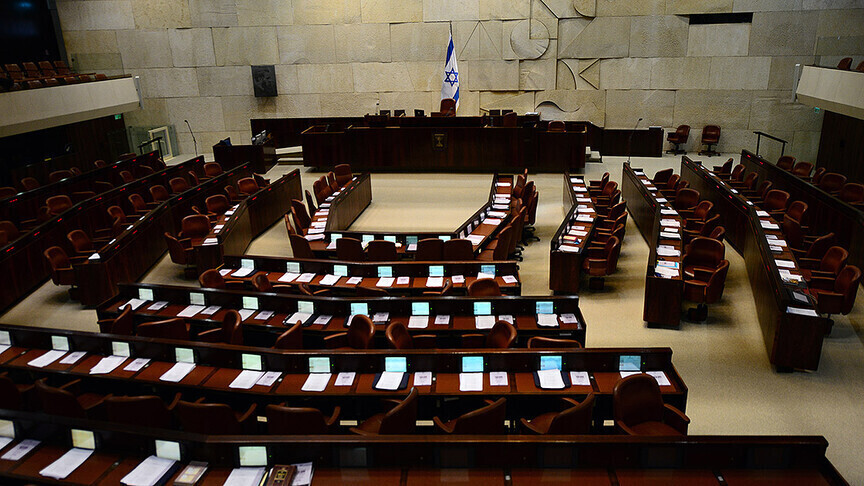
Israelis will vote in parliamentary elections on Oct. 27 in a contest that would determine Prime Minister Benjamin Netanyahu’s political future.
Voters will elect the 120 members of Israel’s 26th Knesset following the dissolution of parliament on July 17. Netanyahu’s government will remain in office until a new government is formed.
The election centers on Netanyahu’s Likud party and his principal challengers, particularly former army Chief of Staff Gadi Eisenkot and former Prime Minister Naftali Bennett.
But Israeli governments are rarely determined by which party finishes first. The decisive question is normally which political bloc can secure a simple majority after the votes are counted.
Religious, far-right and Arab (Palestinian) parties that are unlikely to lead the government could therefore emerge as kingmakers, deciding whether Netanyahu remains prime minister or Israel enters another period of political deadlock.
Israel uses nationwide proportional representation, with the entire country treated as a single electoral district.
Voters do not directly elect a prime minister or choose an individual parliamentary candidate. Instead, they select a closed party list with candidates ranked before the election.
A party must receive at least 3.25% of valid ballots to enter the Knesset. Lists that fail to cross that threshold receive no seats, and their votes are excluded from the allocation process.
The 120 seats are then distributed proportionally among the qualifying lists. Israel uses the Bader-Ofer method to allocate the remaining seats after an initial calculation based on each party’s vote share.
Parties may also sign surplus-vote agreements allowing two lists to combine unused votes when competing for an additional seat.
The threshold makes smaller parties particularly important. If a faction aligned with Netanyahu or the opposition falls slightly short of 3.25%, its entire bloc could lose several potential seats.
No party has ever won an outright majority of 61 seats, making coalition governments a permanent feature of Israeli politics.
The leader of the largest party does not automatically become prime minister. What matters is whether a candidate can assemble sufficient parliamentary support.
After the official results are published, Israel’s president consults the parties elected to the Knesset. Each faction recommends a lawmaker to form the government.
The president then gives the mandate to the lawmaker considered most likely to succeed, who is not necessarily the leader of the largest party.
The first candidate has 28 days to negotiate a coalition and may receive an extension of up to 14 days.
Coalition negotiations generally cover ministerial positions, government policies, legislation and budget allocations demanded by prospective partners.
If the first candidate fails, the president may give another lawmaker 28 days to form a government. If that attempt also fails, 61 lawmakers may request within 21 days that a particular candidate receive a final 14-day mandate.
Failure at the end of that process would send Israel to another election.
Coalition bargaining has shaped Israeli governments since the first parliamentary election in 1949.
Mapai, the predecessor of the Labor Party, dominated politics during Israel’s first three decades but still formed coalitions with religious and smaller parties.
The 1977 election marked a turning point when late Prime Minister Menachem Begin’s Likud ended nearly 30 years of Labor-led rule, establishing the party as one of Israel’s principal forces.
An inconclusive election in 1984 produced a national unity government involving Likud and the Labor-led Alignment. Shimon Peres and Yitzhak Shamir agreed to rotate the premiership, each serving for two years.
Israel experimented with directly electing its prime minister in 1996, 1999 and 2001. Netanyahu won the first direct election, Ehud Barak defeated him in 1999 and Ariel Sharon defeated Barak in 2001.
The system was abolished after failing to eliminate dependence on coalitions and contributing to the fragmentation of the party landscape.
Netanyahu returned to office in 2009 and remained prime minister until 2021, leading successive coalitions with different combinations of nationalist, religious, centrist and ultra-Orthodox parties.
Between April 2019 and November 2022, Israel held five elections as rival blocs repeatedly struggled to form or sustain governments.
Netanyahu and centrist leader Benny Gantz established a rotation government in 2020, but it collapsed before Gantz could assume the premiership.
In 2021, Bennett and Yair Lapid formed an ideologically diverse coalition that included right-wing, centrist and left-wing parties as well as Ra’am, which represents Palestinian citizens of Israel.
Bennett initially served as prime minister before Lapid took over after parliament was dissolved in 2022.
Netanyahu returned following the November 2022 election and formed a coalition with far-right and ultra-Orthodox parties. He has served as prime minister for a cumulative period of nearly 19 years, making him Israel’s longest-serving leader.
The Oct. 27 vote will follow the first Knesset since 1988 to complete a full four-year term.
Netanyahu is seeking another term at the head of Likud, the main party of the Israeli right.
His likely partners include Itamar Ben-Gvir’s far-right Otzma Yehudit, Finance Minister Bezalel Smotrich’s Religious Zionism and the ultra-Orthodox Shas and United Torah Judaism parties.
Netanyahu’s principal challengers include Eisenkot, a former military chief who leads the centrist Yashar party.
Eisenkot has emerged as a leading contender in opinion polls. His military background could help him attract centrist voters and former Likud supporters dissatisfied with Netanyahu’s government.
Bennett, who served as prime minister from 2021 to 2022, heads the Together alliance formed with former Prime Minister Yair Lapid.
The alliance seeks to combine Bennett’s appeal among nationalist and religious voters with Lapid’s predominantly centrist and secular base.
Other opposition forces include Avigdor Lieberman’s right-wing Yisrael Beiteinu and the Democrats, led by former army deputy chief of staff Yair Golan.
Netanyahu’s opponents, however, do not constitute a unified ideological bloc. They range from left-wing and centrist factions to nationalist right-wing parties whose principal shared objective is removing him.
Their disagreements over relations with Palestinians, Gaza, Palestinian statehood, religion-state issues and cooperation with Palestinian parties could complicate efforts to establish an alternative government.
The survival of smaller parties could be decisive for both camps.
A list receiving slightly less than 3.25% wins no representation, while one narrowly crossing the threshold could secure around four seats.
For Netanyahu, the performance of Smotrich’s Religious Zionism and Ben-Gvir’s Otzma Yehudit could be essential. If either fails to qualify, his bloc could lose the seats needed for a majority.
The same calculation applies to smaller opposition factions because votes cast for a party below the threshold are not transferred to ideologically similar lists.
Shas and United Torah Judaism could also play a central role. The ultra-Orthodox parties have frequently used their pivotal position in coalition negotiations to secure policies and funding for their constituencies.
Hadash, Balad and Ta’al have announced that they will contest the election on a joint list in an effort to increase turnout and strengthen the representation of Palestinian citizens of Israel.
Ra’am, led by Mansour Abbas, did not join the alliance. Palestinian parties will therefore contest the election through two lists.
Palestinian citizens constitute around 20% of Israel’s population, but their parliamentary representation has been affected by internal divisions and lower voter turnout.
Four parties formed the Joint List in 2015 and secured 13 seats. It won a record 15 seats in 2020 before disagreements caused the alliance to fragment. The parties currently hold a combined 10 seats.
Polls project that they could collectively secure 11 seats, potentially placing them in a decisive position if neither Netanyahu’s bloc nor the Jewish opposition obtains a majority.
Most Jewish opposition leaders have ruled out forming a government dependent on Palestinian lawmakers. A precedent nevertheless exists: Ra’am joined the Bennett-Lapid coalition in 2021 and helped it obtain a parliamentary majority.
A poll published Sunday by the Israeli Public Broadcasting Authority projected 51 seats for Netanyahu’s bloc, down from 52 in the previous survey, compared with 57 for Eisenkot’s camp and 12 for Palestinian parties.
Eisenkot’s Yashar was projected to emerge as the largest party with 24 seats, ahead of Netanyahu’s Likud with 22, while Bennett’s Together alliance received 14.
The poll also showed Eisenkot leading Netanyahu as the preferred candidate for prime minister by 41% to 35%. Bennett narrowly surpassed Netanyahu for the first time, receiving 37% to Netanyahu’s 36%.
The election is expected to serve largely as a referendum on Netanyahu’s leadership, his government’s security record and its management of the Gaza war and other regional conflicts.
Netanyahu is likely to emphasize his experience and portray himself as the strongest candidate to confront Iran and its regional allies.
His opponents are expected to focus on the government’s security failures, the management of the Gaza war and the absence of an official state commission of inquiry.
Military exemptions for ultra-Orthodox Jewish men are another major issue. Shas and United Torah Judaism have demanded legislation protecting exemptions for religious seminary students, while reservists and other Israelis argue that the burden of military service is distributed unequally.
The dispute poses a challenge for Netanyahu, who depends on ultra-Orthodox parties but must also retain Likud voters who support broader enlistment.
news_share_descriptionsubscription_contact