Serdar Dincel
01 September 2026•Update: 01 September 2026
- More than 17 million children in Sudan need children need humanitarian assistance, Save the Children's Deputy Country Director for Sudan tells Anadolu
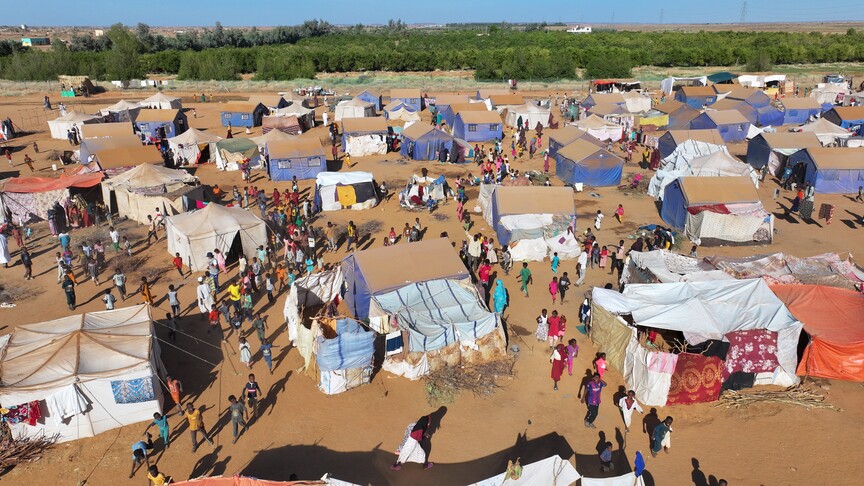
More than three years into Sudan’s war, the country’s displacement crisis is deepening.
More than 200,000 people have been newly displaced across Sudan’s central Kordofan region since late last year as fighting has intensified, according to the UN. At the same time, continued attacks have targeted critical water and electricity infrastructure in El Obeid, the region’s largest city.
The UN migration agency (IOM) issued a warning last week as seasonal flooding in neighboring North Darfur state further compounded the displacement crisis.
“The warning signs are impossible to ignore,” IOM Director General Amy Pope said, stressing that Sudan is facing “one of the world’s largest displacement crises.”
Without urgent action, the plight of families who have fled violence will only worsen, she said.
Sudan has been embroiled in war between the army and the paramilitary Rapid Support Forces (RSF) since April 2023. The conflict has killed tens of thousands of people, according to international estimates, including UN figures.
The scale of displacement is particularly visible in Kordofan’s Sheikan district, where El Obeid is located, according to the IOM.
According to the 2022 census figures cited by Sudan Tribune, El Obeid had a population of around 750,000.
That figure has surged to 3.4 million, with displaced people accounting for roughly half of the total, the daily reported citing Sudan’s Humanitarian Aid Commission.
The crisis extends beyond one region.
Displacement extends to other regions
The IOM said 78,000 people have been displaced in Blue Nile state, while another 18,000 were forced to flee their homes in West Darfur during the first half of August.
In North Darfur, meanwhile, heavy rains in the Tawila area have damaged nearly 1,350 homes and displaced more than 1,000 families, the IOM said.
Additional flooding in the North Darfur towns of Kabkabiya and Shangil Tobaya forced dozens of families to seek shelter in temporary accommodation.
The humanitarian situation has also been complicated by the movement of people returning to Sudan.
More than 4.5 million people have returned to Sudan over the past 18 months, including significant numbers who have gone back to the capital Khartoum, the IOM said.
But many are returning to areas where basic services such as water, electricity, healthcare and schools have been destroyed or remain unavailable.
In Blue Nile state, the Sudan Doctors Network said thousands had arrived in Damazin, the state capital, from the Geissan area following escalating military hostilities.
“RSF attacks on Geissan have caused more than 5,000 displaced people to flee to Damazin, amid critical conditions requiring urgent intervention,” the medics said.
'Lost generation’
Save the Children, a humanitarian organization, reported in mid-August that nearly 39,000 children arrived in El Obeid during the first six months of this year.
They fled active combat zones “in a hurry, with nothing,” Francesco Lanino, the organization's deputy country director for Sudan, told Anadolu.
Many children have witnessed violence, death and the loss of family members, he said.
Lanino said more than 17 million children in Sudan need humanitarian assistance. Out of them, 8 million children are out of school.
This marks a "lost generation," he said.