Ahmet Nurduhan and Esra Tekin
14 July 2026•Update: 14 July 2026
- Gjoni noted that Prime Minister Edi Rama's leadership is 'frequently viewed positively by Western partners,' emphasizing that Albania's foreign and security policies remain fully aligned with those of EU and NATO
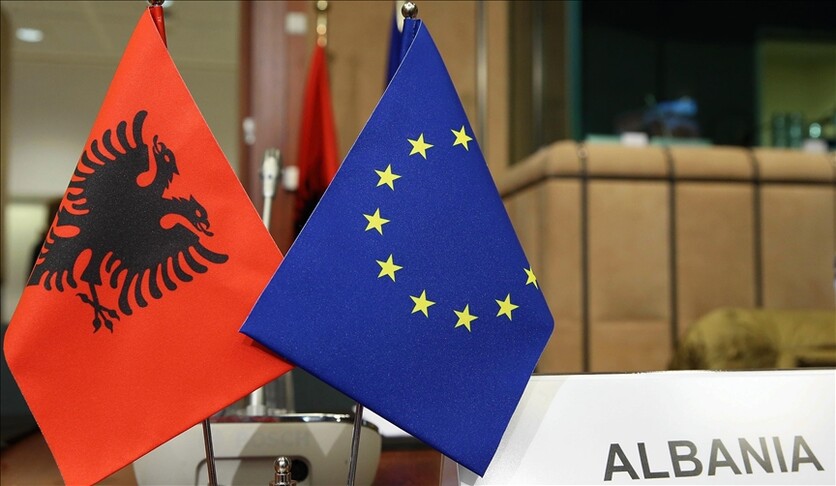
At the ninth Accession Conference between the EU and Albania, scheduled to be held in Brussels on Tuesday, Albania aims to close Chapters 25, 26, and 30, marking the closure of the first three chapters in its EU accession process.
Following the opening of the first negotiation chapters with the EU on Oct. 15, 2024, Albanian Prime Minister Edi Rama said that closing these first three chapters represents "another important milestone in Albania's path toward EU membership."
Rama stated that Albania has significantly accelerated the process of transposing EU legislation into national law by making use of artificial intelligence, allowing the country to complete much of its work in a remarkably short period.
He underlined that EU membership is not simply about meeting formal conditions.
"It requires incorporating around 4,000 legislative and regulatory acts into Albania's legal system and, more importantly, ensuring their effective implementation," he said.
EU Commissioner for Enlargement Marta Kos described the Accession Conference as "a milestone for Albania, marking the beginning of the closure of negotiating chapters."
NATO Summit in Tirana will mark most critical moment for Albania's geopolitics, security expert
Meanwhile, following NATO's 36th Summit held in Ankara, analysts say that the 37th NATO Summit, which will be hosted by Albania's capital Tirana, could further strengthen the country's strategic position.
Prime Minister Edi Rama's role has also been viewed positively by Western partners.
As Albania continues to make rapid progress toward EU membership, hosting the next NATO Summit is being regarded as a significant achievement for both the country and Rama.
Albanian security policy expert Juxhina Sotiri Gjoni told Anadolu that last week's summit in Ankara marked the operational implementation of decisions made at the Vilnius and The Hague summits.
"The summit brought an end to the era of promises made to the public. The focus has shifted to ensuring that the defense spending target of 5% of GDP, agreed upon in The Hague, is used to produce actual weapons, equipment, and infrastructure," he added.
"Türkiye is a key actor and a geopolitical anchor for three main reasons. It is a leader in the Mediterranean and Southeastern Europe. For countries in the region, such as Albania, Türkiye assumes a direct military leadership role. It serves as a regional shield and as the guarantor of the concept of a 'more European NATO.'"
Gjoni stated that the NATO Summit in Tirana would represent one of the most significant moments in Albania's geopolitical history, transforming the country from merely a consumer of security into a decision-maker and provider of stability in the Western Balkans.
"Hosting such a summit confirms Albania's diplomatic and operational maturity on the global stage. Organizing an event of this scale demonstrates that Albania can provide the high-level physical, logistical, and cybersecurity standards required to host the world's most powerful leaders. The event goes beyond symbolism, representing formal recognition by allies that Albania's infrastructure meets the requirements of modern defense," she added.
Gjoni also referred to the "Joint Declaration on Defense Cooperation" signed in March 2025 by the defense ministries of Albania, Kosovo, and Croatia, saying it had elevated Albania to a leadership role in regional defense.
"Albania believes that the full integration of Kosovo into regional security structures is the only way to counter hybrid threats and external interference in the region."
She further noted that Prime Minister Rama's leadership is "frequently viewed positively by Western partners," emphasizing that Albania's foreign and security policies remain fully aligned with those of the EU and NATO, particularly regarding support for Ukraine and sanctions against Russia.
Albania's EU membership application
Albania officially applied for EU membership in 2009. After the European Commission issued a favorable opinion in October 2012, the European Council granted Albania candidate country status in June 2014.
Formal accession negotiations between Albania and the EU began in July 2022.
Albania received an invitation to join NATO at the Bucharest Summit on April 2, 2008, and officially launched accession negotiations on April 25, 2008.
After NATO member states ratified Albania's accession protocols, the country officially became a NATO member on April 1, 2009, thereby achieving one of its key Euro-Atlantic integration goals.