Aamir Latif
25 August 2026•Update: 25 August 2026
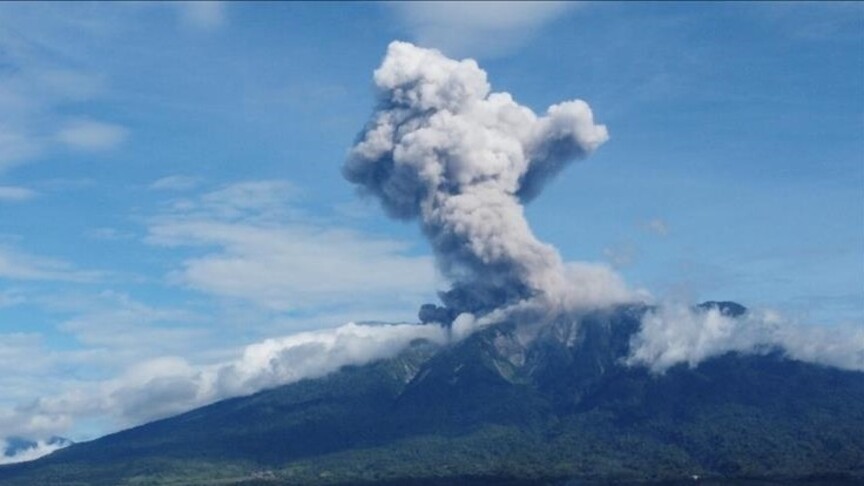
Indonesian authorities continued to monitor heightened volcanic activity after Mount Anak Krakatau erupted several times, local media reported Tuesday.
Four consecutive eruptions were recorded Monday evening, the Jakarta Globe reported.
Displaying similar characteristics, each eruption sent an ash column around 300 meters (984 feet) above the summit, or approximately 457 meters (1,499 feet) above sea level.
Andi Suwardi, an officer at the Anak Krakatau Monitoring Post in Rajabasa district, said eruptions continued into Monday night.
The four evening eruptions added to a series of eruptions recorded throughout Monday as Anak Krakatau, located in the Sunda Strait between the islands of Sumatra and Java, erupted several times from morning through the afternoon, with the highest ash column reaching around 400 meters (1,312 feet) above the summit.
Authorities urged residents, tourists and visitors not to approach Mount Anak Krakatau and to avoid conducting any activities within a 3-kilometer (1.86-mile) radius of the active crater.
Anak Krakatau, or “Child of Krakatau,” emerged from the sea in the late 1920s within the caldera left by the catastrophic 1883 eruption of the original Krakatau volcano.
In 1883, in one of the most powerful volcanic events in recorded history, the eruption of Krakatau caused massive tsunamis and devastated coastal communities around the Sunda Strait, killing more than 36,000 people.
A partial collapse of Anak Krakatau triggered another deadly tsunami along the coasts of Banten and Lampung in December 2018.