Ali Canberk Ozbugutu, Emirhan Yilmaz, and Emir Yildirim
10 August 2026•Update: 10 August 2026
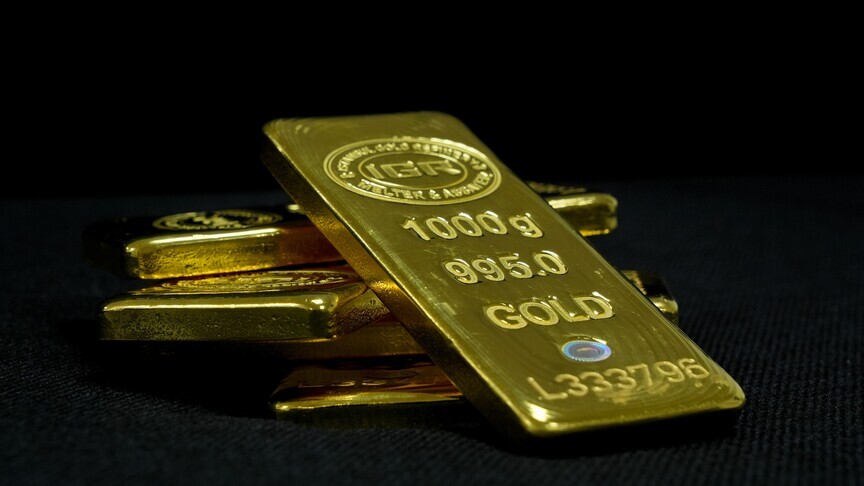
Gold climbed 7.4% over the past week and marked its fastest increase since Jan. 19, hitting $4,342 per ounce amid weak US employment and the likelihood that the Fed will keep rates less restrictive than previously expected.
Gold showed its strongest performance in nearly seven months, while silver gained 10.2% last week to $65.34 per ounce, also marking its fastest weekly gain over the same period.
Gold started the week flat, trading at $4,340 per ounce, while silver started with a 0.8% increase to $64.
Gold posted an 8.7% rise on Jan. 19, reaching $4,980 per ounce, while silver posted a 14.7% surge the same week, reaching $102.48.
Gold and silver began the year on a positive trend amid optimism that the Fed would be more dovish, but the trend reversed on Feb. 28, when the US and Israel launched joint attacks on Iran and Tehran retaliated, fueling inflationary pressures worldwide and pushing up oil prices while prompting central banks to hike rates.
Gold and silver demand declined due to interest rate sensitivity and rising liquidity needs during wartime, but demand found some support as Middle East tensions relatively eased and the US labor market cooled, tempering hawkish expectations over the Fed’s monetary policy.
Zafer Ergezen, a futures and commodity markets specialist, told Anadolu that gold rose amid geopolitical risks, high oil prices and the possibility of rate hikes, but despite mounting risks, the precious metal refused to dip below $3,400 per ounce.
“This showed that all these risks had already been factored into the market,” he said. “Markets were expected to price in more positive news going forward, and we started seeing that gradually.”
“Expectations of a ceasefire in the Middle East were reflected in prices, and this will continue for some time, but rising capital inflows also influenced gold prices as both institutional investors and central banks expect the worst is over,” he added.
Ergezen stated that monitoring the US dollar has become key for gold and silver since movements parallel to the US Dollar Index show a high correlation, as gold prices went up when the dollar declined and vice versa.
“So long as the war continues and the Strait of Hormuz remains closed with shipments disrupted and oil prices high, inflation concerns will rise, which will in turn keep bond yields high, forcing central banks to raise rates — this is the scenario we’re in,” he said. “High interest rates or rising rate expectations drive down global growth and hence reduce demand.”
“Persistently high interest rates and oil dependence became key, and as oil prices pull back, gold and silver purchases increase — oil is still above $80 a barrel, and when it reaches around the $70 level, gold and silver will be much more likely to see positive price movements.”
“The US Dollar Index remains close to the 100 threshold, and that’s still a risk factor,” he added.
Ergezen stated that the US Dollar Index and high oil prices limited the upward momentum in gold and silver, and that those two need to decline for further upward movements in the precious metals.
“The $4,400-per-ounce level is a key threshold for gold, and it will struggle to break above it, and the next level is $4,550,” he noted.
He mentioned that silver is expected to show a stronger trend than gold, with high interest rates also impacting its prices.
“Silver is much more sensitive to industrial developments, and growth concerns are felt more clearly in the silver market — if an agreement is reached in the Middle East, the gold-silver ratio could drop back to the 60s, but otherwise this rate remains above 70, which means silver will again have an advantage over gold,” he said.
“If the war is not expected to turn even worse or if the likelihood of rate hikes does not increase further, silver could outperform gold to some extent over the next one to two months at least,” he added.