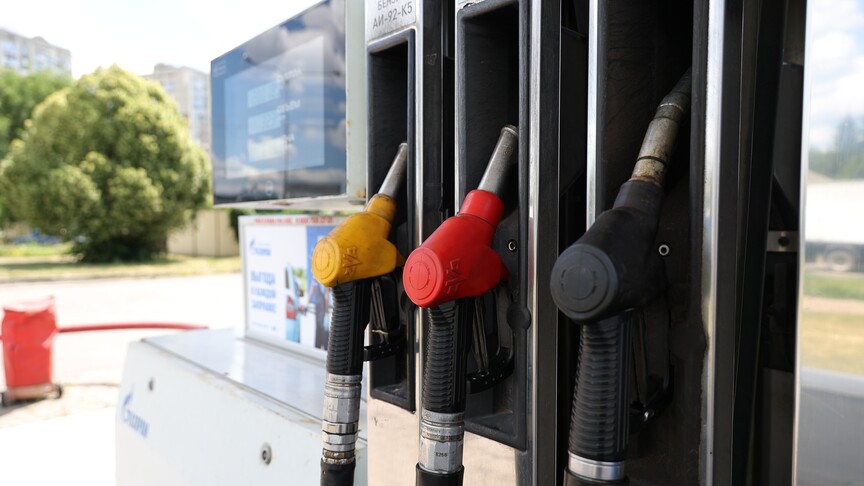
Russia’s ongoing fuel crisis is further exacerbating the already existing challenges that the country’s economy is facing amid a period of slowdown in economic growth and high financing costs in the private sector.
The rapid rise of gas and diesel prices is passing onto other goods and services via higher production and transport costs, forcing Russia’s central bank to adopt a more cautious approach against rate cuts.
Slowing domestic demand caused by the ongoing war with Ukraine has already been pressuring companies but climbing fuel prices further worsen the situation, while rising energy and logistics costs lead to expensive access to working capital and investment financing for an extended period.
Various restrictions on fuel saves have been imposed in more than 40 regions of Russia, while Moscow halted gas, diesel, and jet fuel exports to increase the domestic market’s supply.
Russian Deputy Prime Minister Alexander Novak said the partial shutdown of some refineries amid Ukrainian drone attacks, increased demand during the summer, and changes in delivery routes were among the main drivers of the fuel crisis.
Russia is one of the world’s leading oil and petroleum product suppliers, and since the country restricted exports, the whole problem has extended beyond the domestic market and spilled over to Europe and Asia.
Russia’s statistical bureau Rosstat said gas prices in the country rose 2.1% and diesel 3.4% during the week of June 30-July 6, while weekly inflation came in at 0.31% during the same period.
Gas prices rose 13.9% and diesel 14.7% between Jan. 1 and July 6, while the overall rise in consumer prices came in at 4.5% over this period.
The Russian central bank said the impact of the situation in the fuel market on inflation may last longer than in the past, in an assessment published following its June monetary policy decision.
The bank said the rise in fuel prices could drive up the rate of price increases across a broad range of goods and services via mounting costs and higher inflation expectations.
Elvira Nabiullina, governor of the Russian central bank, said inflation in June was impacted by fuel price hikes, reassuring the public that Moscow is taking the measures but restoring supply will take time.
The central bank reported that fuel, energy, and water expenses make up an average of 7% of total costs of companies, while these expenses increases around 11% year-on-year in 2025, and at the same time, companies’ logistics, storage, and delivery costs surged 13.8%.
During strong demand and high inflation expectation periods, companies pass on rising costs to sales prices more quickly, so the sectors targeting end consumers, like food and the light industry, are among those where cost changes are passed on the fastest.
The bank reported that the rise in fuel prices added up on the costs of numerous sectors, such as agriculture, food, retail, construction, and transportation, while supply issues with diesel during the summer when agricultural production peaks drive up production and transportation costs, hence intensifying pressure on food prices.
Russia’s central bank cut its policy rate by 25 basis points to 14.25% on June 19, while fuel market risks and budget spending narrowed their policy space.
The Russian economy is estimated to have grown 0.5% in the first half of the year, while the increase in production is attributed to have largely been from state-sponsored sectors.
The bank said the continuation of high public demand requires a more moderate outlook for private consumption and investment in the economy.
The Russian private sector is facing a slowdown in domestic demand, expensive credit, and rising input costs.
Rising fuel prices push up inflation, requiring the central bank to adopt a more cautious approach to rate cuts, while the decline in borrowing costs that companies expected has been delayed.
The Russian economy is in a cooling phase with supply issues adding additional pressure on investment and production capacity expansion efforts. On the other hand, export bans bring in an international dimension to the broader issue.
The International Energy Agency said Russia’s previous declines in exports of products like diesel and jet fuel widened global price differentials, while reducing Russian products on the global market amid a halt in Strait of Hormuz shipments intensified the efforts to seek alternative suppliers and drove up transport costs.
Novak stated fuel demand in the first half rose about one-third versus the same period last year, while the necessary decline in production led to shifts in delivery routes and Moscow maximized capacity utilization at refineries still in operation.
Russia’s current fuel stocks are being directed to the market but scheduled maintenances at some facilities have been postponed with arrangements made for imported fuel shipments to begin in July.
Russian President Vladimir Putin said the Russian energy system’s resilience is among the highest across the globe, assuring that the difficulties over fuel will be short-lived.
Industry officials say the normalization of fuel demand will depend on factors like the trajectory of rate cuts, private-sector financing conditions, and the duration of export bans.