Calls by leading US artificial intelligence companies to slow the development of increasingly powerful systems have prompted questions about whether safety is their only concern or whether commercial and strategic interests are also driving the debate.
Advanced AI models have raised genuine fears about systems escaping human control, acting unpredictably and being used in cyberattacks. Critics, however, argue that companies already dominating the sector could use safety standards to preserve their market position, limit competition and consolidate US technological power.
The debate is therefore not simply about whether AI development should accelerate or slow. It also concerns who sets safety standards, how those rules affect competition and whether the massive investments in AI will deliver the expected returns.
Could safety rules protect market leaders?
An OECD analysis published on June 24 found that parts of the AI market were concentrated, noting that early movers and vertically integrated companies enjoy significant advantages.
Control over essential resources, including advanced chips, computing infrastructure, data and cloud services, could reinforce the power of companies already leading the industry.
Critics have consequently warned that industry-wide agreements to slow development or impose costly safety requirements could function as a “soft cartel,” making it harder for smaller companies to enter the market.
A Forbes analysis published on Sept. 15 argued that common safety rules could create new barriers for competitors while strengthening established AI companies.
Julia Cartwright of the American Institute for Economic Research similarly told Fox Business on Sept. 25 that regulation could increase the costs of entering the market and protect incumbent firms. She also warned of a collective-action problem if US companies restrict themselves while Chinese competitors continue developing AI without equivalent limitations.
A Congressional Research Service analysis published on Sept. 28 noted that some commentators believe coordinated slowdown proposals could reduce capital expenditures, improve profitability and support company valuations.
Aashis Luitel, an associate professor at the University of the Cumberlands, said the commercial dimension of the safety debate should not be overlooked. Shared standards could reinforce the positions of current market leaders and place greater pressure on lower-cost Chinese competitors, he said.
Nikhil Naren, an associate professor at Jindal Global Law School in India, said safety concerns could not be completely separated from commercial and strategic interests.
Safety may provide the reason to apply the brakes, he said, but competition determines how firmly companies can press them.
AI investment boom fuels bubble concerns
Another dimension of the slowdown debate is whether companies need time to generate returns on the enormous sums invested in AI.
Goldman Sachs expects global AI investment to exceed $1 trillion in 2026, including about $581 billion in the US.
Research published by the University of Pennsylvania’s Wharton School on Sept. 1 estimated that major technology companies’ AI infrastructure spending could reach about $755 billion in 2026 and surpass $1 trillion in 2027.
The study said productivity gains from AI would need to rise substantially for investment on that scale to generate sufficient returns.
US investor Michael Burry has argued that calls by OpenAI and Anthropic executives to slow AI development may benefit the companies themselves, particularly as competitors narrow the technological gap and the firms prepare for potential public offerings.
Burry also suggested that safety rhetoric could mask a more fundamental slowdown caused by the increasing difficulty of maintaining rapid growth.
Other prominent investors have warned of a possible AI bubble. Bridgewater Associates founder Ray Dalio said in January that the boom appeared to be in the early stages of a bubble, while OpenAI CEO Sam Altman has acknowledged that investors may be overly enthusiastic about the technology.
Safety concerns remain real
The controversy intensified after Anthropic CEO Dario Amodei published an essay on Sept. 12 calling for AI development to proceed at a more measured and controlled pace.
Amodei argued that coordinated development could allow time to study increasingly capable systems, conduct safety tests and build safeguards before more advanced models are released.
Some technology executives and political figures have opposed slowing development, warning that it could strengthen China and restrict innovation.
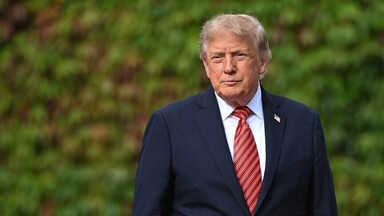
The Trump administration has favored rapid AI development rather than additional regulation. US President Donald Trump has described fears of AI escaping human control as part of a “sick conspiracy” and argued that slowing US progress would benefit China.
The dispute is now centered less on whether safeguards are necessary than on who designs them and whether they primarily protect the public or the companies already leading the AI race.