

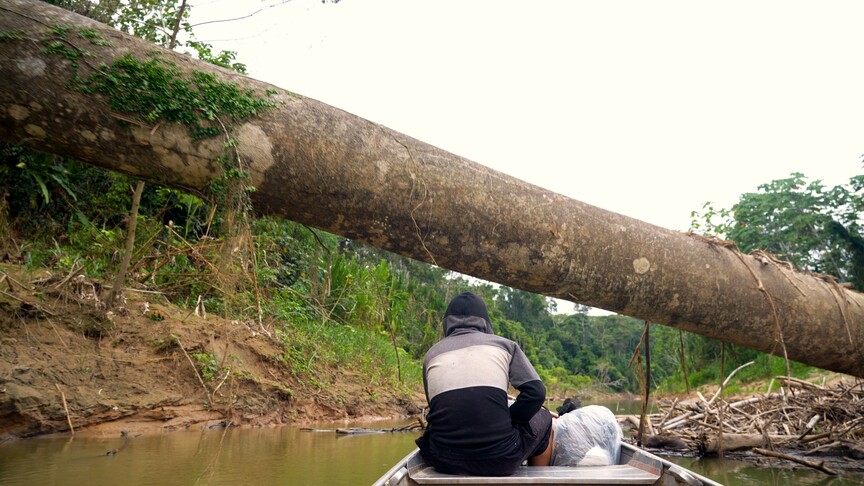
At 14, Luis was approached by three men. They gave him a revolver and a backpack loaded with seven kilos of cocaine paste. Then they instructed him to walk three days along a dirt road cutting through dense jungle. It would be the first of three such journeys Luis would make.
"The first time I cried because it was such a long trip. The trail was rough, and we had to watch for jaguars at night," said Luis.
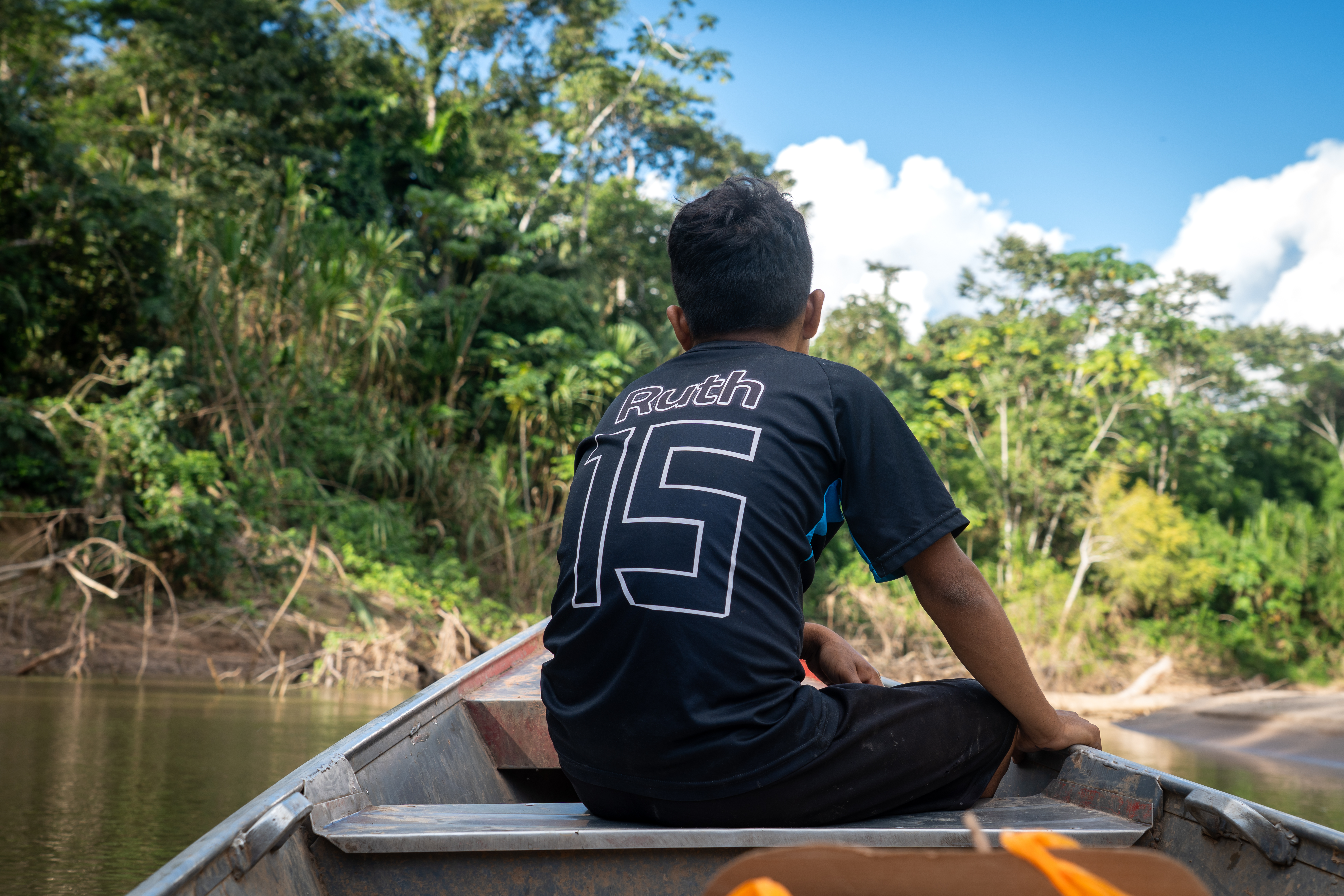
(Luis, a 17-year-old former drug courier was recruited to traffic cocaine base paste near Peru’s border with Brazil. Neil Giardino, Anadolu Agency.)
Luis, now 17, whose real name Anadolu is withholding to protect the minor’s identity, belongs to the Amahuaca, an Indigenous people living in an isolated corner of Peru's far eastern Amazon region called Yurua.
His account is not isolated. Testimony from other Indigenous minors interviewed in Breu indicates an alarming transformation along Peru’s remote Amazon border with Brazil, where a network of jungle roads and clandestine airstrips is carving a cocaine trafficking corridor.
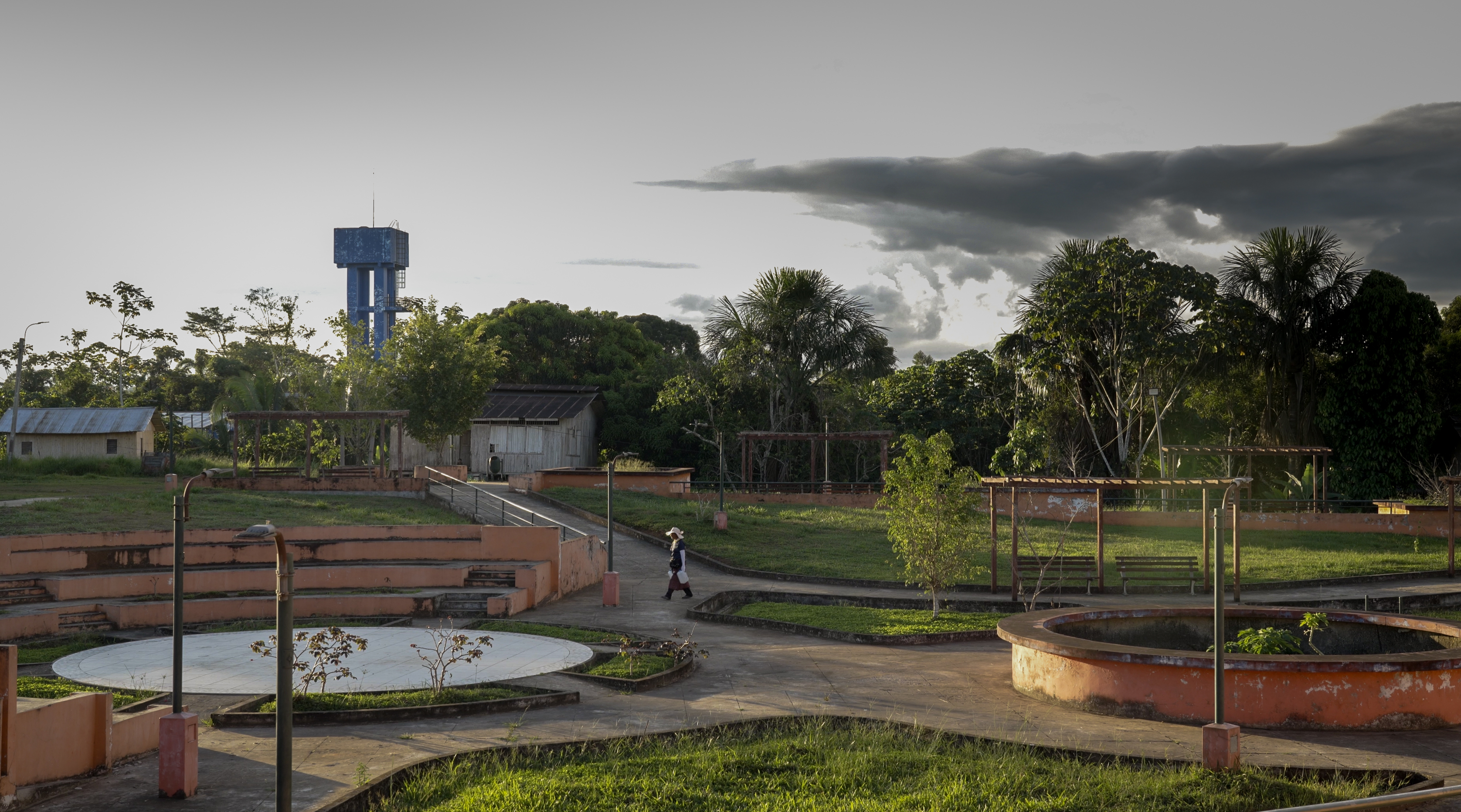
(The remote township of Breu in Peru’s far eastern Amazon has emerged as a transit point in the international cocaine trade. Neil Giardino, Anadolu Agency.)
As the drug trade spreads, it is reshaping this remote frontier, bringing coca crops, cocaine labs, and organized criminal syndicates operating on both sides of the border. It is rupturing Indigenous communities and increasingly putting the lives of Indigenous children at risk, recruiting them not only as drug couriers, but also as consumers.
A remote frontier with little state presence
The sweltering backwater town of Breu where Luis was recruited is connected to the Peruvian Amazon city of Pucallpa by a thread — a dirt airstrip used by light aircraft is only reliably serviceable during the Amazon’s dry season.
During the rainy season, Breu is all but cut off from the rest of the country. Surrounded by dense forest at the edge of Peru’s eastern frontier, the Brazilian state of Acre is roughly 40 minutes by motorboat along the meandering Yurua River.
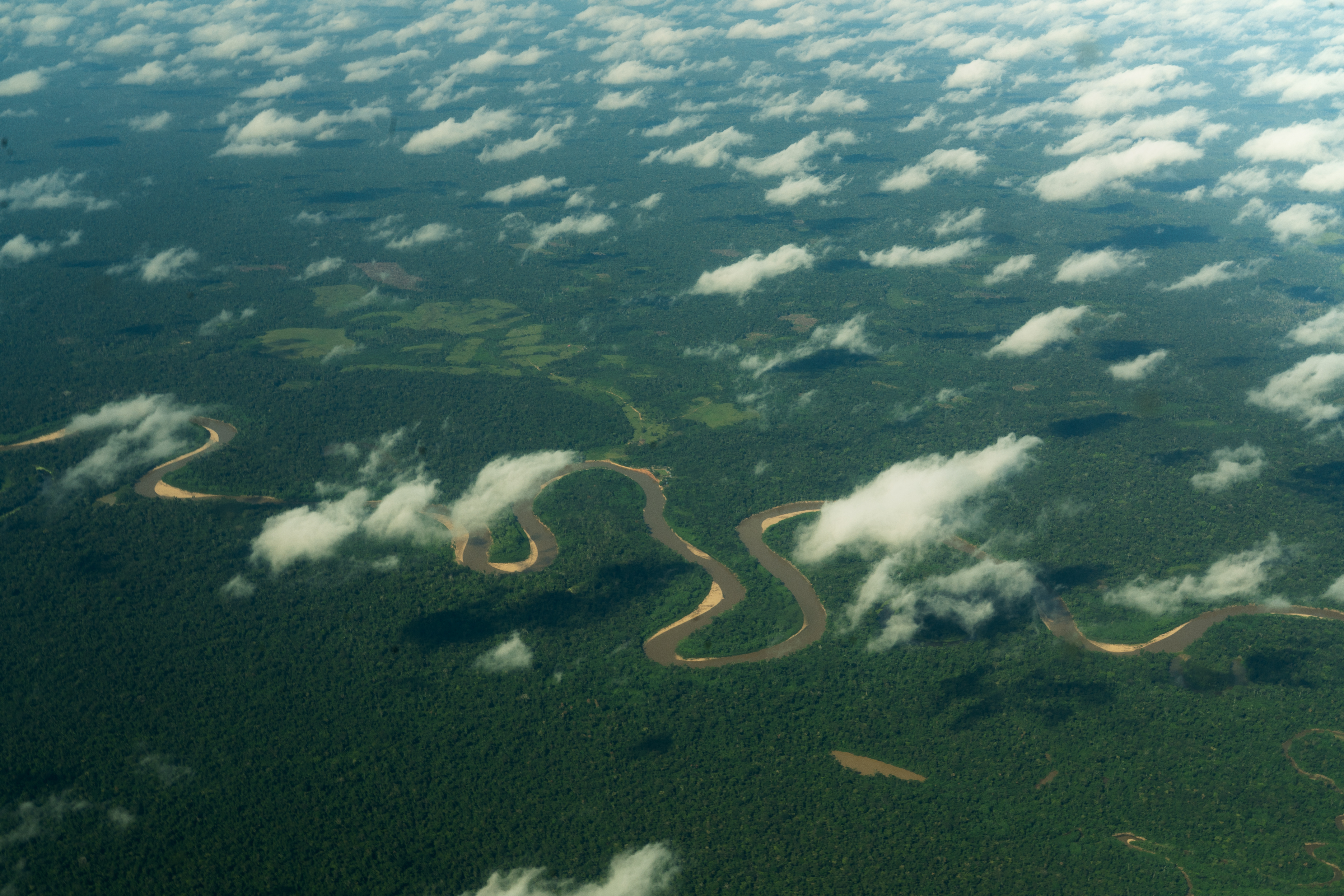
(From the air, clandestine coca farms and jungle airstrips are visible in remote forests along Peru’s border with Brazil. Neil Giardino, Anadolu Agency.)
For the largely Indigenous population of Breu, the isolation is more than geographic reality: it reflects the limited reach of the Peruvian state, and the vacuum it has created for illegal economies.
In recent years, Breu, Yurua’s regional capital, has emerged as a transit point connecting coca, the raw ingredient for cocaine, from the Andean slopes and Amazonian interior onward to Brazil and Bolivia. Drug traffickers are employing a combination of jungle trails, road networks, rivers, and clandestine airstrips to move cocaine across the border.
Yurua is a multi-ethnic region home to remote Indigenous communities as well as semi-nomadic tribes still living in isolation. Its isolation is, in part, what draws illegal actors to this hidden stretch of the border. Interviews with local government officials, Indigenous leaders, and residents revealed a weak state presence and porous international border have allowed criminal groups to operate with relative impunity on both sides of the frontier.
“We have a worrying issue here in Yurua. Young people are consuming illegal products,” said Breu’s mayor, Manuel Arevalo Mogrovejo. “I’ve heard there are individuals who pass through our region and utilize the roads that exist to move (drugs). But those same drugs are not being produced here. They’re using our region as a corridor.”
That corridor, which straddles the border with Brazil, has seen little state enforcement. The international demarcation line and a police checkpoint marking the border has stood abandoned for over 15 years, according to Yurua’s Indigenous federation president, Fernando Aroni Lozano. During a recent visit to the area, Anadolu confirmed that the checkpoint remains abandoned.
The isolated road traveled by Luis did not begin as a drug route.
It was opened in the 1980s by an oil company, first appearing on satellite imagery in 1987. The road later fell into disrepair, but loggers reestablished it in the 1990s, widening and extending it to reach valuable cedar and mahogany. In the following decade, trails branched out from the main route, allowing loggers to push deeper into the forest to extract the timer and transport it toward the Ucayali River, a major Amazon tributary, and onward to Pucallpa.
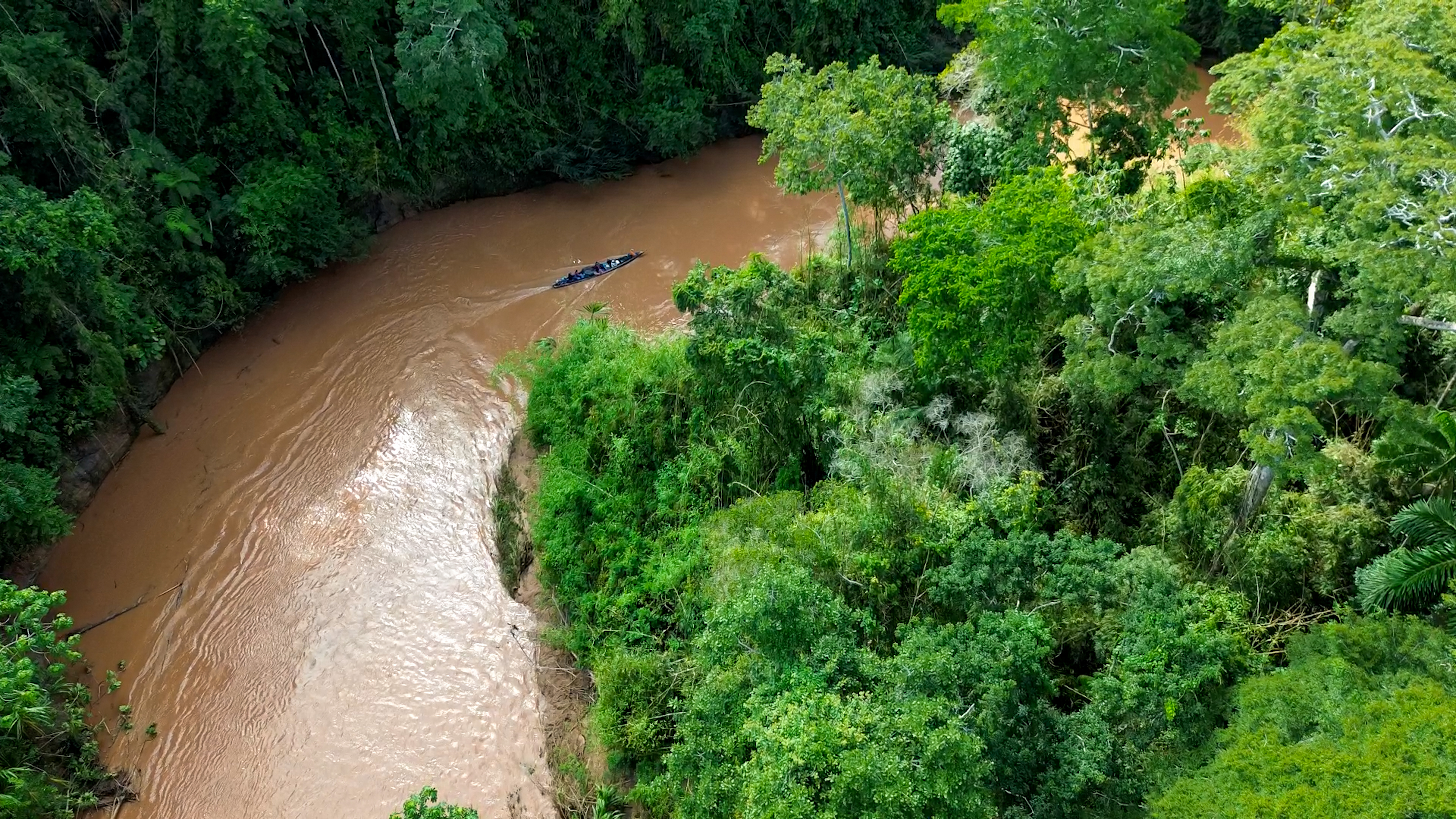
(The international cocaine trade is increasingly using remote rivers and streams to move cocaine base paste through the Amazon along the heavily forested Peru-Brazil border. Neil Giardino, Anadolu Agency.)
Deforestation for the creation of road networks is fracturing rainforests. In Yurua, between 2000 and 2021, over 60 square kilometers (23 square miles) were cleared within five kilometers of the road, according to Monitoring of the Andean Amazon Project.
That same road system, first carved through the forest for oil exploration and later logging, is now being revived for the cocaine trade, allowing criminal groups access to a route established decades earlier for extractive industries.
‘Insidious veins’
NASA satellite imagery, research by the University of Richmond, and testimony from Indigenous authorities reveal how the informal UC-105, as the 200-kilometer road is known, has expanded deforestation for coca crops, jungle airstrips, and illegal mining operations. Connecting Breu to Nueva Italia, a logging town along the Ucayali River, the road is now being used to traffic cocaine trade.
"There is no greater impact on the landscapes and livelihoods of the Amazon than roads. And roads are expanding rapidly," said David Salisbury, a professor with the university who has worked in the Yurua region for decades.
Salisbury has led studies on the Yurua road’s impacts on deforestation, land grabbing, illicit crop cultivation, and cultural disruption of Indigenous groups across the region.
"These road networks are not just vectors for deforestation and forest degradation," he said. “They are also insidious veins that bring poison to the cultures; that create opportunities for people to get involved with illegal, illicit activities that are likely not sustainable in the long run, nor beneficial to their communities.”
Despite the presence of illegal actors operating in Yurua, in early 2021, Peruvian lawmakers introduced legislation to incorporate the existing corridor here into a proposed Central Interoceanic Highway linking Pacific ports along Peru’s coast to Brazil. The planned expansion of the Yurua road would run near the Murunahua Indigenous Reserve, a 470,000 hectare (1,815 square mile) protected territory for isolated tribes, putting the reserve and its vulnerable population at risk of encroachment.
While the legislation, which deemed formalizing the road to be "of public necessity," failed to become law, the Ucayali regional government had already incorporated the route into road planning. In the absence of legislative action, on the ground, the road continues to advance.
Advocates have presented the UC-105 as an economic boon that would connect remote communities to markets and bolster international trade with Brazil. Support for the formalization of the road exists among some Indigenous communities in the region, where access to health care and economic opportunities remains all but out of reach.
At the same time, Indigenous organizations, environmental groups, and Peru’s ombudsman have challenged the project on the grounds of environmental concerns and a lack of prior consultation with local communities.
Salisbury told Anadolu that the UC-105 has little basis in geographic reality as an economic corridor connecting Peru and Brazil. The road, he explained, would have to cross through titled Indigenous territories and heavily forested protected areas, while Brazil’s existing road networks remain far from the border.
"This is just an argument to access an area and plunder its natural resources. And also to take advantage of the local people for low-paid itinerant labor and exploitation. And there is also the trafficking of illegal substances," said Salisbury.
In Luis' case, that exploitation took the form of recruitment. The men he said who solicited him, a sibling, and other Indigenous children in Breu were Peruvians.
Luis was approached behind Breu’s market, in a part of town where children are increasingly exposed to "tickets," or rolled cigarettes filled with a harsh cocaine extract made with kerosine and other chemicals.
Luis said he was transported to Pucallpa on a twin-engine plane, then by highway to Nueva Italia where he was handed over the shipment of cocaine. From there, he said, he walked three days through the jungle trail, weighed down with the drugs.
He recalled cold, restless nights gripping his revolver as he drifted in and out of sleep.
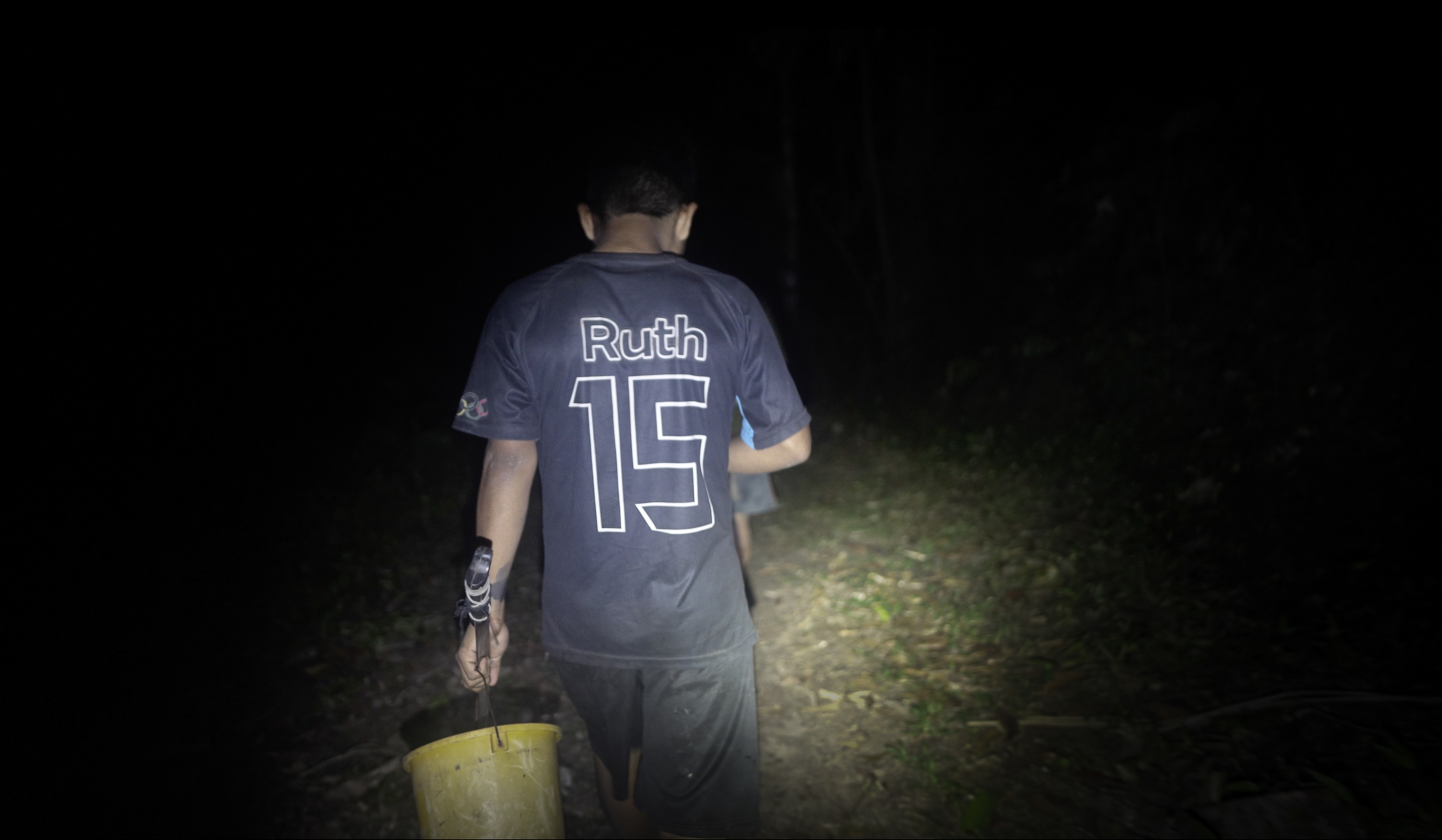
(Luis, an Amahuaca Indigenous minor, was given a revolver and a backpack of cocaine which he trafficked through the Amazon. The international cocaine trade here is increasingly targeting Indigenous children as couriers and consumers of the drug. Neil Giardino, Anadolu Agency.)
"That’s how we protected ourselves at night. We took turns keeping watch. They gave us coats, and mosquito nets," said Luis.
On the fourth day, Luis said they made their way back to Breu where his journey began.
"When we arrived, we handed over the drugs and three men paid us. We were lucky because a lot of times, the [drug mules] get into accidents along the way," said Luis. “When we did the handover, they waited with guns in hand.”
Luis said he was paid 1,500 Peruvian Soles, or around $440 – more money than he’d ever seen in his life. He kept quiet about where the money came from, but used most of it to buy household items for his mother.
Illegal economies "provide short-term opportunities for cash. Once you're in those systems, it's also really difficult to get out of them," said Salisbury. As a network of roads and trails moves into the region and expands, he said, the consequences could destabilize not just Indigenous communities, but broader political and economic networks.
Around 40 kilometers into Brazil from the Peruvian border as the crow flies, Spanish-speaking men armed with machine guns allegedly threatened families in the Indigenous Ashaninka community of Apiwtxa in July. Once a paragon of Indigenous-led land conservation and territorial sovereignty, in recent months the Ashaninka here have reeled from expanding criminal routes along the border.
Back on Peruvian territory, Luis said he vowed never to work as a drug courier again.
"I’m going to Pucallpa to finish studying. I’d like to be a leader for my community someday, if god wills it," he said.