Diyar Guldogan and Ikram Kouachi
24 September 2026•Update: 24 September 2026
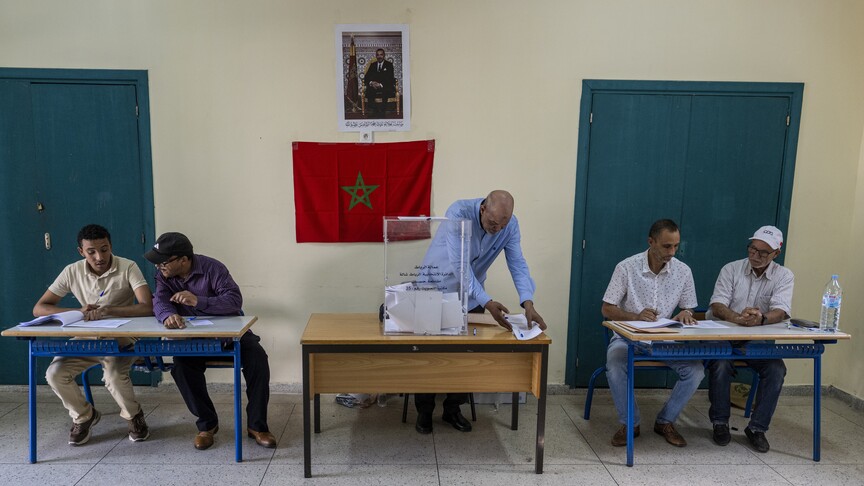
Morocco’s Authenticity and Modernity Party (PAM) emerged as the leading party in the country’s legislative elections, securing 97 seats, according to results announced by the Interior Ministry.
Interior Minister Abdelouafi Laftit announced the preliminary official results at a news conference in the capital Rabat early Thursday.
Laftit said voting across the country took place under “normal conditions, except for isolated cases,” which he did not specify, that “did not affect the electoral process.”
The National Rally of Independents (RNI) followed PAM with 66 seats, while the Istiqlal Party won 65 seats.
The Justice and Development Party (PJD) placed fourth with 54 seats.
The Popular Movement won 29 seats, followed by the Socialist Union of Popular Forces with 26, the Party of Progress and Socialism with 19 and the Constitutional Union with 17.
The Left Alliance and Social Democratic Movement each won eight seats, while the Democratic Forces Front and Insaf Party each secured two seats. The New Democrats and Unity and Democracy parties each won one seat.
The results determine the composition of Morocco’s 395-member House of Representatives.
Under the country’s constitutional system, the king appoints the head of government from the party that wins the largest number of seats.
The ministry said voter turnout stood at 38.02% nationwide, down from 50.18% in the 2021 legislative elections.
According to official data, the number of voters registered on the electoral rolls stood at 15,801,162.
A party needs at least 198 seats for a majority in the House, opening the way for consultations to form a governing majority following the announcement of the results.
In the 2021 elections, RNI topped the results with 102 seats, followed by PAM with 86 and Istiqlal with 81.
RNI leader Aziz Akhannouch currently heads a coalition government that also includes PAM and Istiqlal.
The next government will face political, economic, and social issues, as well as projects related to Morocco’s preparations to co-host the 2030 FIFA World Cup.